Part I: Core Concept Analysis 核心概念分析
气质 (qì zhì) - What is "Khí Chất"?
The word 气质 in Chinese carries a unique cultural depth that is difficult to fully translate into Vietnamese. 气 (qì) is breath, life energy; 质 (zhì) is essence, quality. When combined, 气质 is not simply "good looks" but a comprehensive demeanor - the way you stand, sit, talk, and react to life all exude a special "energy."
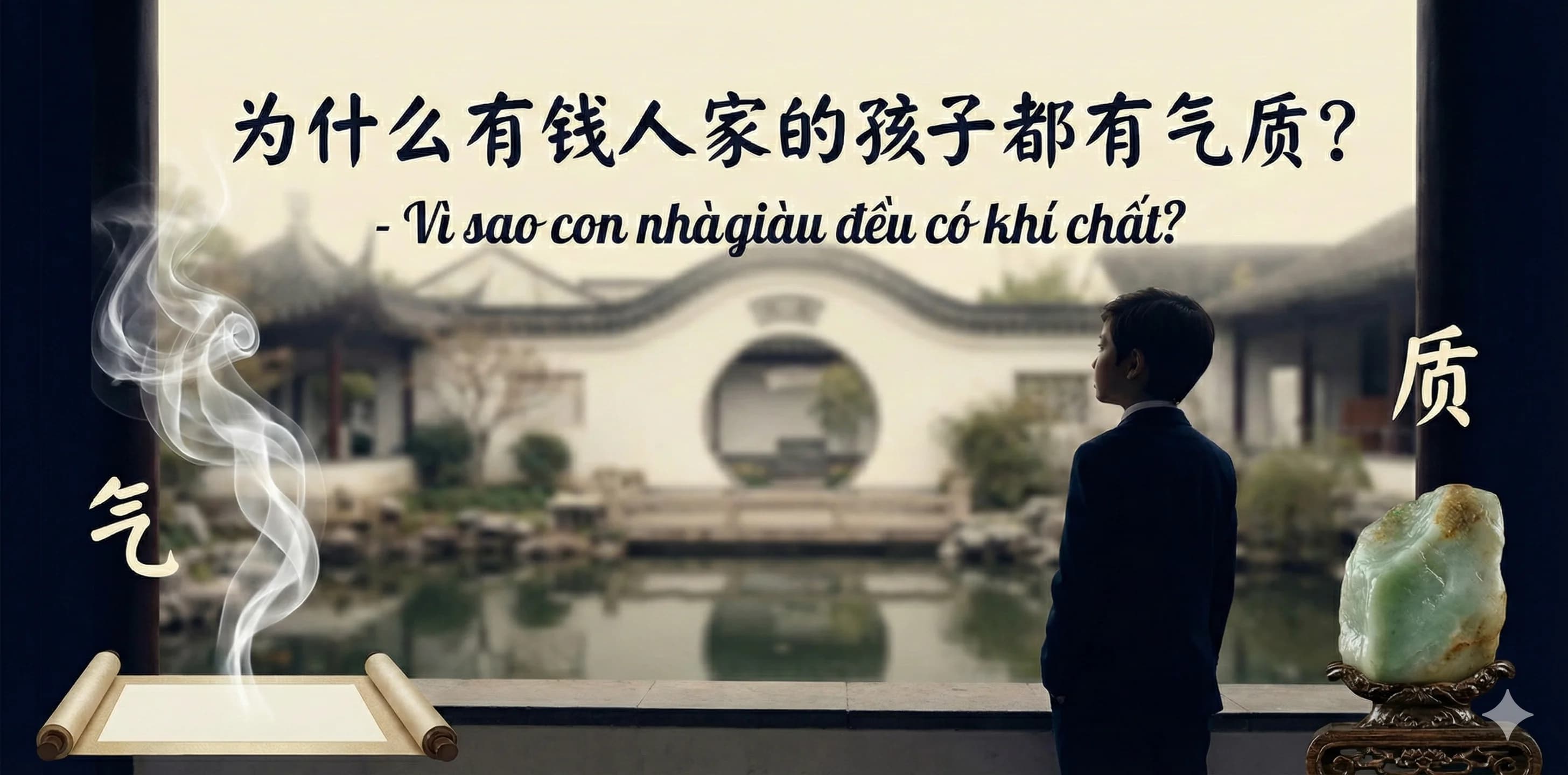
Today's lesson focuses on the question: 为什么有钱人家的孩子都有气质? (Wèi shén me yǒu qián rén jiā de hái zi dōu yǒu qì zhì?) - Why do children from wealthy families all have this 'qì zhì'?
Important Grammar Structure
为什么...都...? (Wèi shén me... dōu...?) - Why... all...?
为什么 = Why (interrogative word)
都 = All (adverb emphasizing the entire scope)
Example: 为什么他们都成功了?(Why did they all succeed?)
Part II: The Concept of "Social Circle" - 圈子文化
原文 (Original Text):
真正的圈子,闻的是味儿。一种你身上没有,他身上有的味儿。
Pinyin: Zhēn zhèng de quān zi, wén de shì wèi er. Yī zhǒng nǐ shēn shàng méi yǒu, tā shēn shàng yǒu de wèi er.
Literal Translation: A real circle, you smell its "flavor." A kind of flavor you don't have on you, but they have on them.
Vocabulary Analysis:
圈子 (quān zi): Social circle, "circle" - This word is very common in Chinese culture to refer to a social stratum or group of people with common characteristics
闻 (wén): To smell - A sensory verb, used figuratively here as "to sense"
味儿 (wèi er): Smell, flavor - A noun with the characteristic Beijing 儿化音 (ér huà yīn) suffix
身上 (shēn shàng): On the body, on oneself - A locational phrase
Important Cultural Point:
Chinese people believe that 圈子 (social circles) determine many opportunities in life. This explains why the concept of 关系 (guān xì - relationships) is so important in Chinese business culture.
Part III: The Concept of "Unlimited Right to Trial and Error" - 无限试错权
原文 (Original Text):
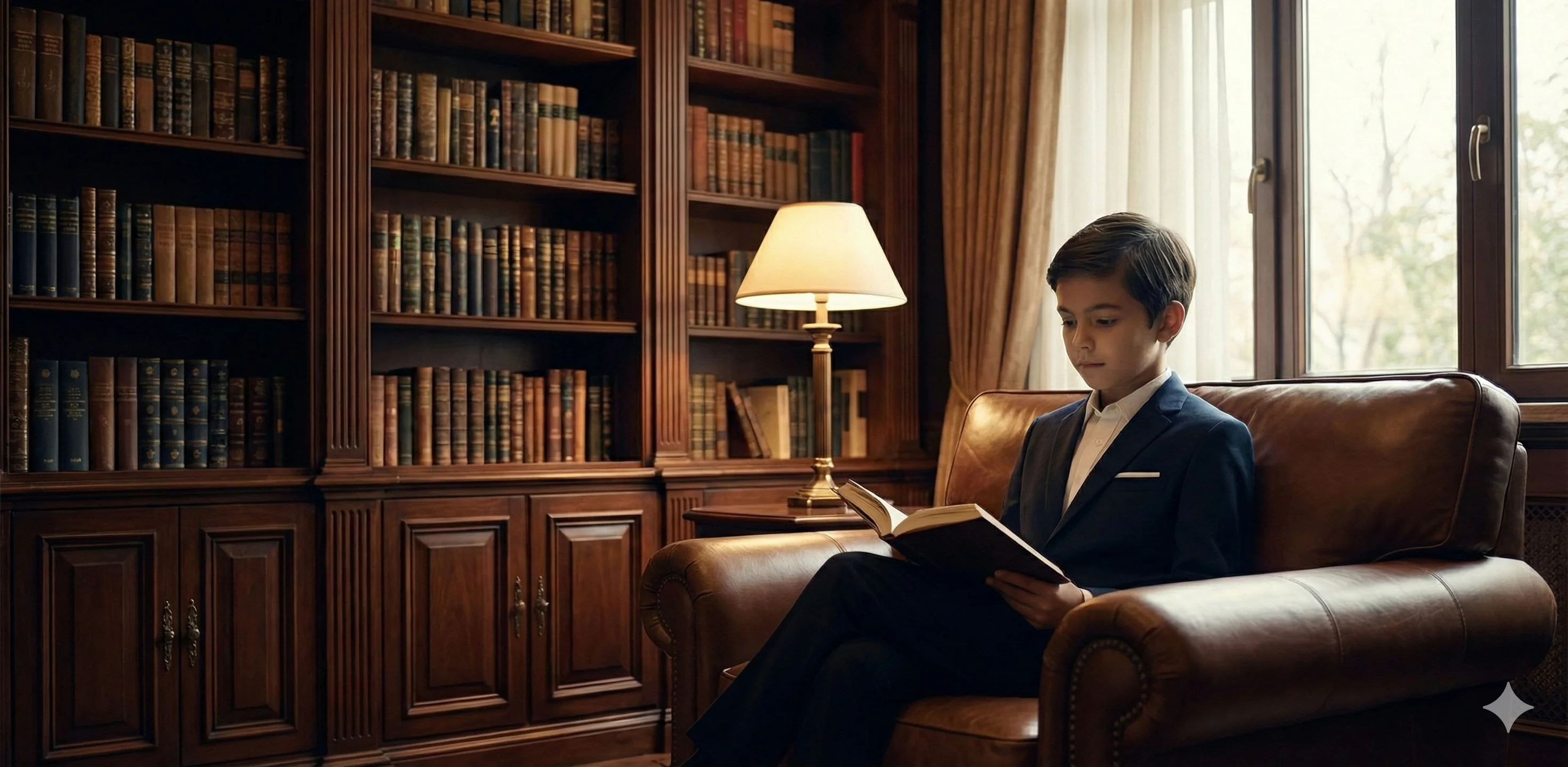
它源于一种最核心的、普通人家庭无法给予的东西:无限试错权。
Pinyin: Tā yuán yú yī zhǒng zuì hé xīn de, pǔ tōng rén jiā tíng wú fǎ jǐ yǔ de dōng xi: wú xiàn shì cuò quán.
Literal Translation: It originates from the most core thing that ordinary families cannot bestow: the unlimited right to trial and error.
Grammar Structure Analysis:
源于 (yuán yú): To originate from - A verb indicating origin
无法给予 (wú fǎ jǐ yǔ): Cannot bestow
Advanced Vocabulary:
试错 (shì cuò): Trial and error - Trial and error methodologylearning-gate
权 (quán): Power, right, authority
无限 (wú xiàn): Unlimited, infinite
普通人 (pǔ tōng rén): Ordinary person
Part IV: Comparing Two Types of Awareness - 认知对比
原文 (Original Text):
普通人家的孩子,人生像走钢丝,脚下是万丈深渊。有钱人家的孩子呢?他的人生是大型游乐场里的碰碰车。
Pinyin: Pǔ tōng rén jiā de hái zi, rén shēng xiàng zǒu gāng sī, jiǎo xià shì wàn zhàng shēn yuān. Yǒu qián rén jiā de hái zi ne? Tā de rén shēng shì dà xíng yóu lè chǎng lǐ de pèng pèng chē.
Literal Translation: Children from ordinary families, life is like walking a tightrope, beneath their feet is a bottomless abyss. And children from wealthy families? Their life is a bumper car in a large amusement park.
The author uses two contrasting images:
走钢丝 (zǒu gāng sī): Walking a tightrope - Dangerous, tense, no room for error
碰碰车 (pèng pèng chē): Bumper car - Fun, safe, collisions are allowed
Comparison Structure:
A像B, C是D - A is like B, C is D
A parallel comparison structure creating strong contrast
像 (xiàng): Is like, resembles (comparison not 100% exact)
是 (shì): Is (direct affirmation)
Part V: Three Characteristics of "Qì Zhì" - 三个特征
Characteristic 1: Not in a Hurry 不急
Original Text: 他们说话做事,不急。语速慢悠悠,条理清晰,好像时间站在他那边。
Semantic analysis:
慢悠悠 (màn yōu yōu): Slowly, leisurely - A reduplicated word with 悠 (yōu) carrying a sense of ease
条理清晰 (tiáo lǐ qīng xī): Clear and logical - An idiom indicating systematic thinking
站在他那边 (zhàn zài tā nà biān): Stands on their side - Time is like an ally
Characteristic 2: Not Caring About Others' Opinions 不在乎别人看法
Original Text: 他们不怎么在乎别人的看法。尤其是无关紧要的人的看法。
Negation structure:
不怎么 (bù zěn me): Not much, not very - A gentler negation than 不
在乎 (zài hu): To care about, to mind
无关紧要 (wú guān jǐn yào): Unimportant, irrelevant - A four-character idiom
Characteristic 3: Having Resilience to Hardship 钝感力
Original Text: 他们有一种钝感力。对很多事情,不敏感,不计较。
Special concept:
钝感力 (dùn gǎn lì): Emotional resilience, thick skin - A term from Japanese 鈍感力, referring to the ability not to be hurt by trivial matters
敏感 (mǐn gǎn): Sensitive - Adjective
计较 (jì jiào): To calculate, to haggle over - Verb with negative connotation
Part VI: Advice for Ordinary People - 给普通人的建议

The Concept of "Reducing Life's Debt Ratio" - 降低负债率
Original Text: 核心就一件事:降低你的人生"负债率"。
In-depth explanation:
负债率 (fù zhài lǜ): Debt ratio - An economics term borrowed by the author to talk about mental burdens
降低 (jiàng dī): To lower, to reduce - Verb
Three Types of "Debt" to Eliminate:
Spiritual Debt 精神负债 - Societally imposed definitions of success
Emotional Debt 情绪负债 - Other people's expectations
Relational Debt 关系负债 - Sunk costs from the past
The Concept of "Dǎnshělí" - 断舍离
断舍离 (duàn shě lí): Cut off - Let go - Detach
断 (duàn): Cut off what is unnecessary
舍 (shě): Let go of what is superfluous
离 (lí): Detach from attachments
This is a minimalist living philosophy from Japan, widely adopted in China.
Part VII: Conclusion - "The Qì Zhì of the Strong" 狠人气质
原文 (Original Text):
那是一种,被生活反复捶打过,眼神里却依然有光的,狠人气质。
Pinyin: Nà shì yī zhǒng, bèi shēng huó fǎn fù chuí dǎ guò, yǎn shén lǐ què yī rán yǒu guāng de, hěn rén qì zhì.
Literal Translation: That is a kind of qì zhì of a strong person, who has been repeatedly beaten by life, yet still has light in their eyes.
Deep Emotional Analysis:
反复捶打 (fǎn fù chuí dǎ): Repeatedly beaten - A powerful image of challenges
眼神里有光 (yǎn shén lǐ yǒu guāng): Has light in the eyes - A metaphor for hope
狠人 (hěn rén): Tough person, strong person - Modern slang for a resilient person
Part VIII: Practice Exercises
Pronunciation Practice:
Key words to master:
气质 (qì zhì) - Qì zhì
无限试错权 (wú xiàn shì cuò quán) - Unlimited right to trial and error
松弛感 (sōng chí gǎn) - Sense of relaxation
断舍离 (duàn shě lí) - Dǎnshělí
负债率 (fù zhài lǜ) - Debt ratio
Reflection Questions:
Do you think you have 无限试错权? Why or why not?
What is making you feel the most 紧绷 (jǐn bēng - tense) in your life right now?
What can you 断舍离 (duàn shě lí) to feel lighter?
Note from the instructor: This lesson not only teaches Chinese but also conveys profound life philosophies from modern Chinese culture. Students, please learn the language, but also learn to think and perceive life from this fresh perspective!
Tiếng Trung NextGZ - Learning is not just language, it's mindset!









Bình luận
0 bình luận
Đăng nhập để tham gia thảo luận cùng cộng đồng!
Đăng nhập ngayĐang tải bình luận...