Discovering the Stunning "Monet's Garden" in the Rain & Chinese Lessons on Surprise
YouTube
1:04 ước tính · Chưa có giọng vi-VN
Prologue: When Rain Cannot Stop a Traveler's Steps
Have you ever traveled, seen "rain showers" in the weather forecast, and felt utterly disappointed? You probably have. The short video above perfectly captures that incredible moment of emotional transition. A boy holds a transparent umbrella under the pouring rain, but his face reveals clear astonishment as he points forward.
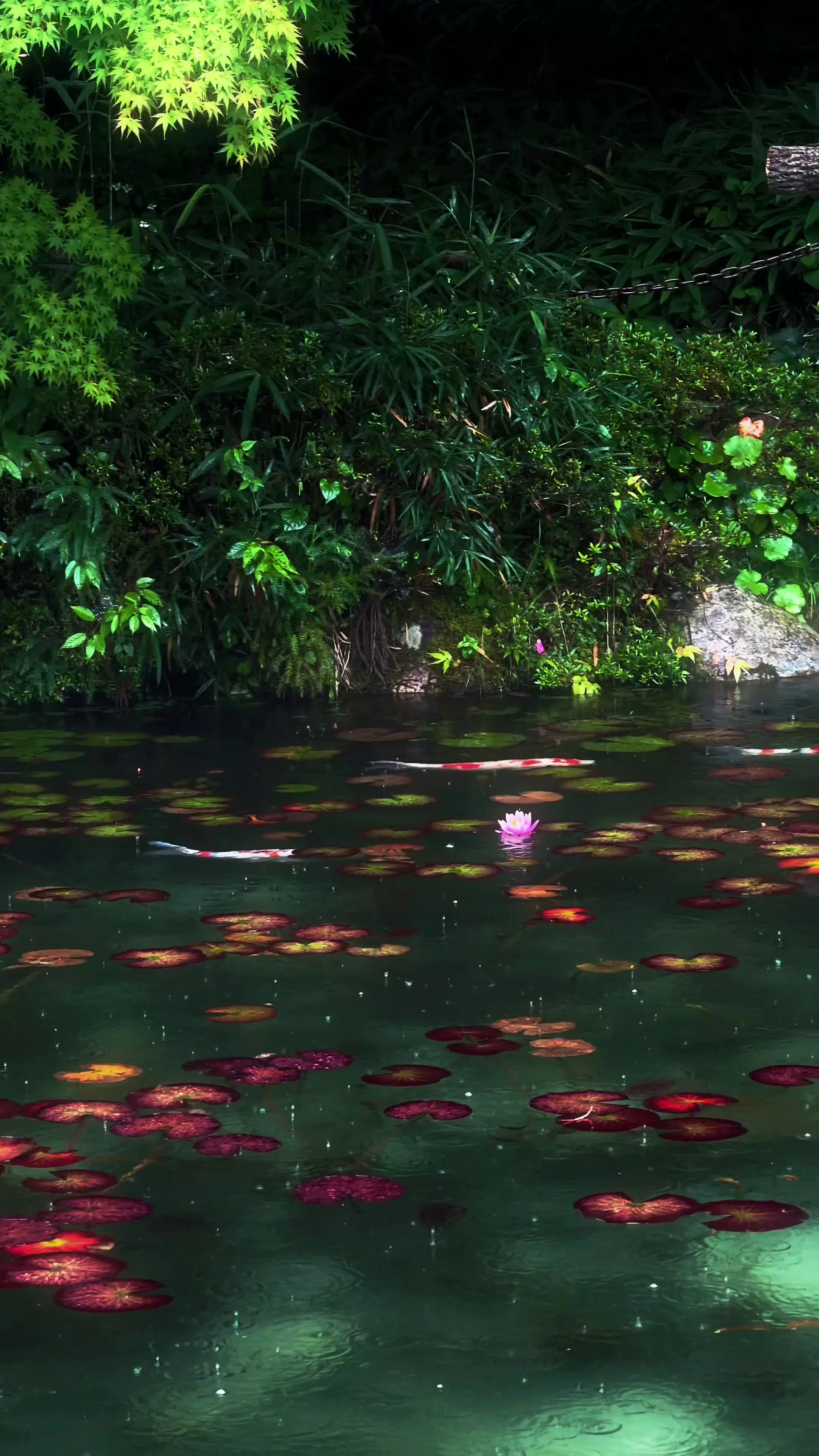
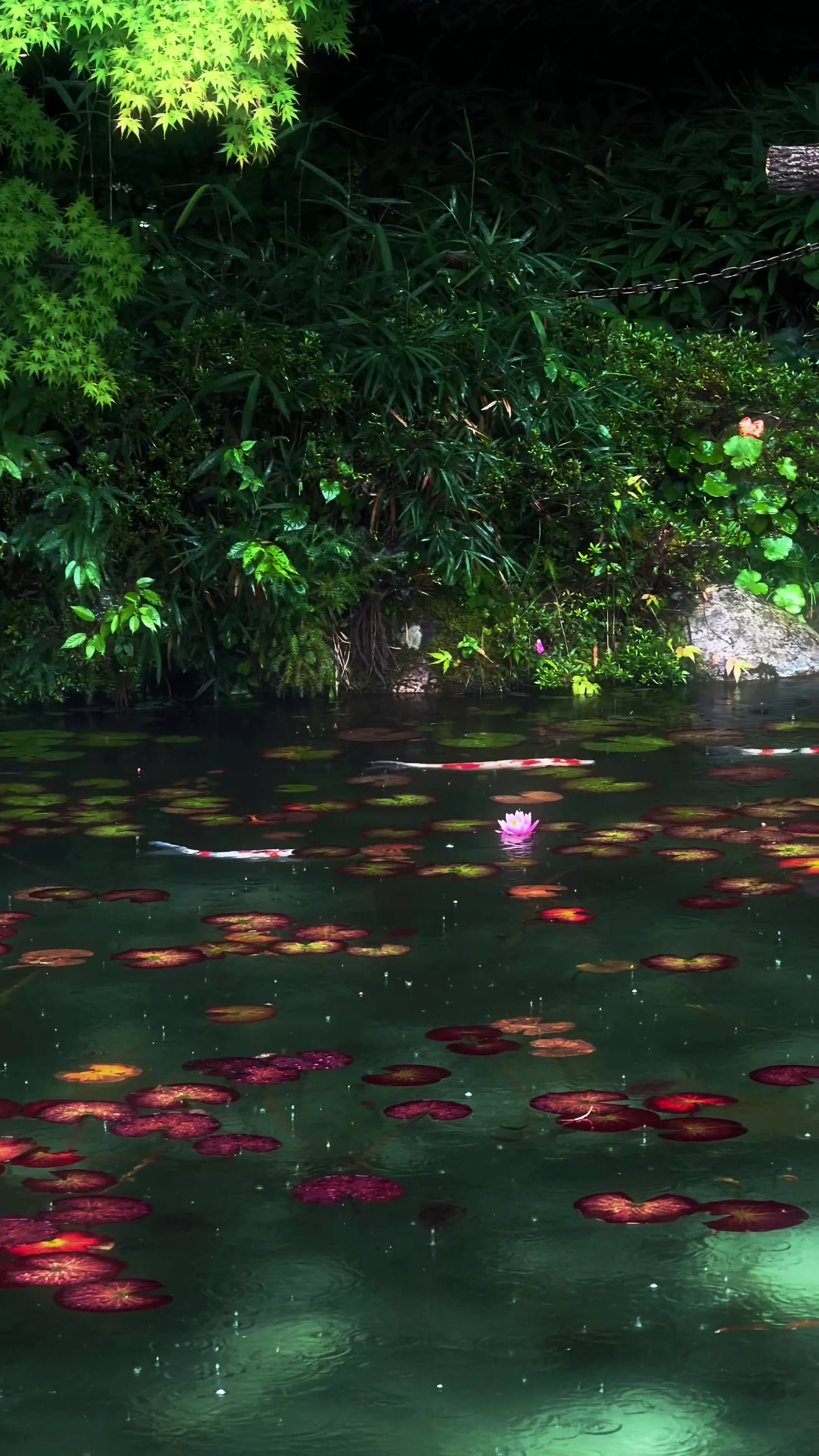
And what appears before his eyes is a vivid scene: Monet's Pond (莫奈池). The crystal-clear water shimmers with emerald hues, colorful Koi fish swim playfully beneath the rain-kissed lily pads. The sight is so beautiful it makes you forget the gloomy weather.
Today, let's thoroughly analyze this experience, from guiding you on how to discover the real-life "Monet's Pond," to picking up a super useful Chinese lesson!
PART 1: TRAVEL CORNER - DECODING THE "MONET'S POND" IN THE VIDEO
1. Analyzing the video context and visual segments
The video delivers a powerfully "healing" feeling. Even though it's raining heavily (seen through the constant ripples on the lake's surface), the rain itself makes the green of the plants even lusher.
Visual highlights: The contrast between the modern plastic umbrella, the dark raincoat, and the stunning emerald-green lake water, dotted with white and red Koi fish swimming gently as if floating in mid-air. The pink water lily blooming in the center of the lake is the perfect finishing touch.
Vibe: Serene, poetic, romantic, and full of surprise.
2. Where exactly is this "Monet's Pond"? Detailed travel guide
"Monet's Pond" in the video is not in France, but in Gifu Prefecture, Japan. Its original name is Namonaki Ike (名もなき池 - The Nameless Pond), located right next to Nemichi Shrine. Because the scenery so closely resembles the "Water Lilies" series by the master painter Claude Monet, visitors affectionately call it "Monet's Pond."
Directions to Monet's Pond (Gifu, Japan):
By public transport: * From JR Gifu Station (or Meitetsu Gifu Station), take the Gifu Itadori Line bus (towards Horado Kiwi Plaza).
Get off at "Horado Kiwi Plaza" stop.
Transfer to the free mini-bus of the Itadori area (Itadori Fureai Bus), ride for about 15 minutes and get off at "Monet no Ike mae" stop. It's a short walk from there.
Travel tip: Rainy weather like in the video is actually a "special blessing," as it reduces the crowds of tourists, and the water surface isn't glaring in sunlight, allowing you to see clearly to the bottom and spot the fish swimming more distinctly.
PART 2: LEARNING CORNER - LEARNING CHINESE THROUGH REAL-LIFE SITUATIONS
From the feeling of astonishment in the video, we have a Chinese sentence that perfectly and poetically captures it:
"以为是坏天气,却遇到了最美的莫奈池"
(Yǐwéi shì huài tiānqì, què yù dào le zuì měi de Mònài chí)
Translation: Thought it was bad weather, but instead encountered the most beautiful Monet's Pond.
1. Core vocabulary analysis (Video context)
Chinese Word | Pinyin | Part of Speech | Meaning & Usage |
以为 | yǐwéi | Verb | To think (erroneously), to believe mistakenly. Used when the truth contradicts initial thoughts. |
坏天气 | huài tiānqì | Noun | Bad weather. In the video, this is the scene of heavy rain (下大雨 - xià dà yǔ). |
却 | què | Adverb | But, yet, instead. Usually placed after the Subject and before the Verb. |
遇到 | yù dào | Verb | To encounter, to come across. (Meet a beautiful scene, meet a person, encounter difficulty). |
莫奈池 | Mònài chí | Noun | Monet's Pond. (莫奈: Monet / 池: Pond, small lake). |
2. Vocabulary expansion for describing the video scene
To accurately describe what you see in the video in Chinese, remember the following vocabulary set:
下雨 (xià yǔ): To rain (The boy is holding an umbrella in the rain).
透明伞 (tòumíng sǎn): Transparent umbrella (The umbrella the boy is holding).
锦鲤 (jǐn lǐ): Koi fish (The red and white fish swimming in the pond).
睡莲 (shuì lián): Water lily (The floating leaves and pink flower on the water).
清澈见底 (qīng chè jiàn dǐ): Crystal clear, so clear you can see the bottom (Describing the water of Monet's Pond).
治愈 (zhì yù): Healing (The feeling the scenery brings).
3. Key grammatical structure & Practical application
A. Contrast Structure: 以为……,却…… (Thought... , but instead...)
This is the "king" structure for talking about unexpected twists in life or travel.
Formula: [Subject 1] + 以为 + [Clause of mistaken thought], [Subject 2] + 却 + [Clause of reality]
(Note: If the subject is the same, 却 comes after the subject in the second clause).
Application Examples (Learners can practice on their own):
我以为这里很无聊,却发现了很多好玩的地方。
(Wǒ yǐwéi zhèlǐ hěn wúliáo, què fāxiàn le hěn duō hǎowán de dìfāng.)
-> I thought this place was very boring, but instead discovered many fun places.
他以为找不到路了,却遇到了一个好心人。
(Tā yǐwéi zhǎo bú dào lù le, què yù dào le yí gè hǎoxīnrén.)
-> He thought he couldn't find his way, but instead met a kind person.
B. Attributive Structure: [Characteristic/Quality] + 的 + [Noun]
In the sentence, there is the phrase 最美的莫奈池 (The most beautiful Monet's Pond). "的" (de) connects the characteristic (最美 - most beautiful) and the object (莫奈池).
Practice matching words based on the video:
清澈的水 (qīngchè de shuǐ) -> Crystal clear water
漂亮的锦鲤 (piàoliang de jǐnlǐ) -> Beautiful Koi fish
粉色的睡莲 (fěnsè de shuìlián) -> Pink water lily
4. Oral practice (Talking about the video)
If someone asks you what this video is about, you can summarize it with the following Chinese passage:
"视频里是一个男生在下大雨的时候打着伞。虽然是坏天气,但是他却看到了非常清澈的莫奈池。池子里有红色的锦鲤和粉色的睡莲,风景真的很治愈。"
(The video shows a boy holding an umbrella while it's raining heavily. Although the weather was bad, he instead saw the incredibly clear Monet's Pond. In the pond, there were red Koi fish and pink water lilies; the scenery was truly healing.)
Conclusion
The image of Monet's Pond and the phrase "以为是坏天气,却遇到了最美的莫奈池" not only gives us a fantastic travel tip in Japan and a profound Chinese lesson on contrast structures, but also a small life philosophy: Sometimes, the worst conditions (like a torrential rainy day) lead us to the most vibrant and genuine beauty.
Have you jotted down all the vocabulary for today? If you had the chance, would you want to visit Monet's Pond in the rain like the boy in the video? Leave a comment and share with us!
📌 Don't forget to save this article to review vocabulary and prepare for your upcoming trip to China or Japan!
Đánh giá bài viết
More from author

 Unity
UnityUnity prototype sạch ngay từ ngày đầu: thư mục, assembly boundary và quy tắc đặt tên cho indie team
Three.js từ trang trắng đến scene 3D đầu tiên: camera, renderer, ánh sáng và vòng lặp animation

Godot prototype đầu tiên: hiểu Scene, Node và Resource bằng một mini game có thể mở rộng

 Màu Sắc & Ánh Sáng
Procreate Selection nâng cao: Feather, Save & Load, Color Fill và ColorDrop cho flat màu sạch
You might also like
 Tips học tiếng Trung
Phân Biệt J Q X, Zh Ch Sh Và Z C S Trong Pinyin: Phát Âm Và Luyện Nghe
 Tips học tiếng Trung
Học Tiếng Trung Mỗi Ngày Cho Người Bận Rộn - Mẹo Hiệu Quả
Tips học tiếng TrungTop 10 Cách Học Tiếng Trung Hiệu Quả - Từ Cơ Bản Đến Thành Thạo Nhanh Chóng
 Tips học tiếng Trung

Bình luận
0 bình luận
Đăng nhập để tham gia thảo luận cùng cộng đồng!
Đăng nhập ngayĐang tải bình luận...