Rich Dad Poor Dad: Understand Money Before Chasing Money
8 min read

1:04 ước tính · Chưa có giọng vi-VN
There's a very familiar feeling: your salary keeps increasing, work remains steady, you still try to go to work every month, but when you look back at the end of the month, your account still doesn't have much left over. The problem sometimes isn't just about "not earning enough money," but about the fact that we haven't truly understood where the money is going, how it stays, and how it can come back to serve us.
That's also why Robert T. Kiyosaki's Rich Dad Poor Dad has become a widely mentioned book when it comes to personal finance. According to the introduction from Rich Dad, the book recounts how two "fathers" with two different financial philosophies influenced the author's view on money, investing, and making money work for you. In Vietnam, this content is widely known through the Rich Dad Poor Dad series, in which volume 1 is Rich Dad Poor Dad: What the Rich Teach Their Kids About Money That the Poor and Middle Class Do Not! by Robert T. Kiyosaki.
This article does not view the book as a "quick wealth formula." On the contrary, read it as a reminder: before chasing money, we need to understand the rules of the money game.
Many people think that just by increasing income, all financial problems will disappear. But reality is often more complicated. When income rises, spending also easily goes up: a better house, a newer phone, a more convenient car, more comfortable meals, more installment payments.
On the outside, it may look like life is "upgrading." But if the monthly cash flow is still going out faster than it comes in, financial pressure just shifts to a higher-end version.
This is the point the video script emphasizes strongly: the problem isn't just how much you earn, but after the money hits your account, is it used to create more foundation or just turned into new expenses?
In the book, "poor dad" represents the familiar way of thinking: study hard, get a stable job, work diligently, save regularly. This is a disciplined lifestyle and not without value.
"Rich dad" asks a different question: how can money not just be something you have to trade your time for, but also create additional value?
The core point is not to deny stable employment. The core point is not to let your entire financial life depend on a single source of income. Rich Dad describes Kiyosaki's thinking centered around assets, liabilities, passive income, and financial education as the foundations for people to be more proactive with money.
Put simply: working isn't wrong. But only knowing how to work, receive a salary, spend it all, and wait for the next paycheck makes it very easy to fall into a loop.
One of the most famous ideas in Rich Dad Poor Dad is the distinction between assets and liabilities.
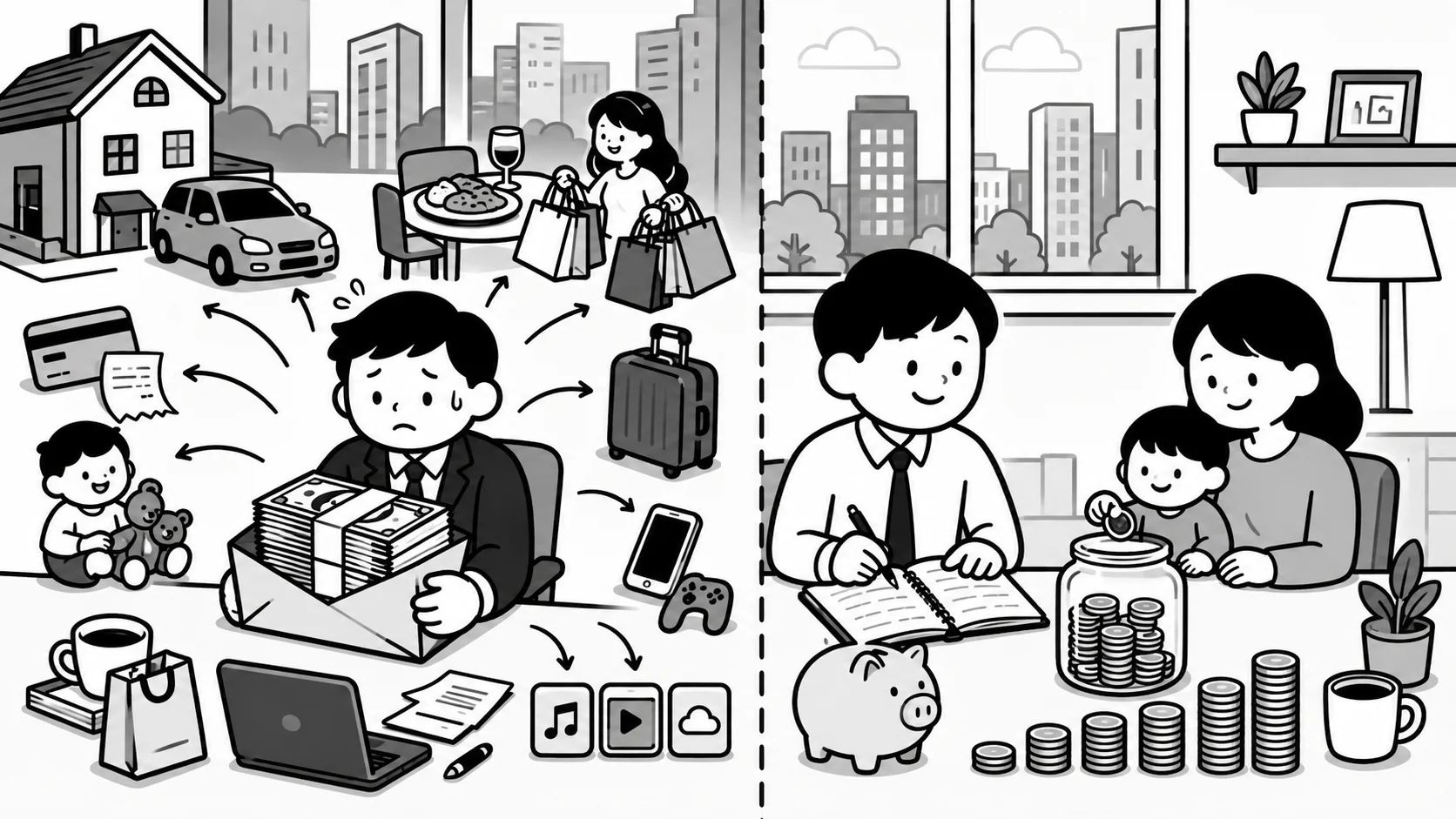
According to the understanding in the book, an asset is something that has the potential to put money into your pocket. A liability is something that constantly takes money out of your pocket. This sounds simple, but in real life, it's very easy to get confused.
For example, a house can be an asset if it generates rental cash flow after expenses. But if that house only burdens you with a long-term loan, repair costs, management fees, and generates no cash flow, it may be a financial drag on you.
The same goes for a car. It can provide convenient transportation, serve your work, and even generate income if used in the right model. But if the car only brings fuel costs, maintenance, insurance, and installment payments, it doesn't automatically become an asset just because you own it.
Concept | Common Misunderstanding | More Practical Understanding | Application in Vietnam |
|---|---|---|---|
Asset | Just buying something expensive means you have an asset | Something that generates cash flow or enhances earning ability | Skills, work tools, rental properties, sales systems |
Liability | Only useless things | Can be useful, but still takes money out regularly | Cars, phones, tech gadgets, consumer loans |
Income | High salary is absolutely safe | Salary is a foundation, but should not be the only source | Working, controlled side gigs, building skills |
Financial Freedom | No longer needing to work | Having more choices with time and money | Reducing dependence, managing spending, increasing value-creation ability |
The key point to remember is: an item can be useful for life but still not be a financial asset. You don't need to be extreme, but you do need to stay clear-headed.
The "rat race" is the image of a mouse constantly running on a wheel. It's very busy, very tired, but its position barely changes.
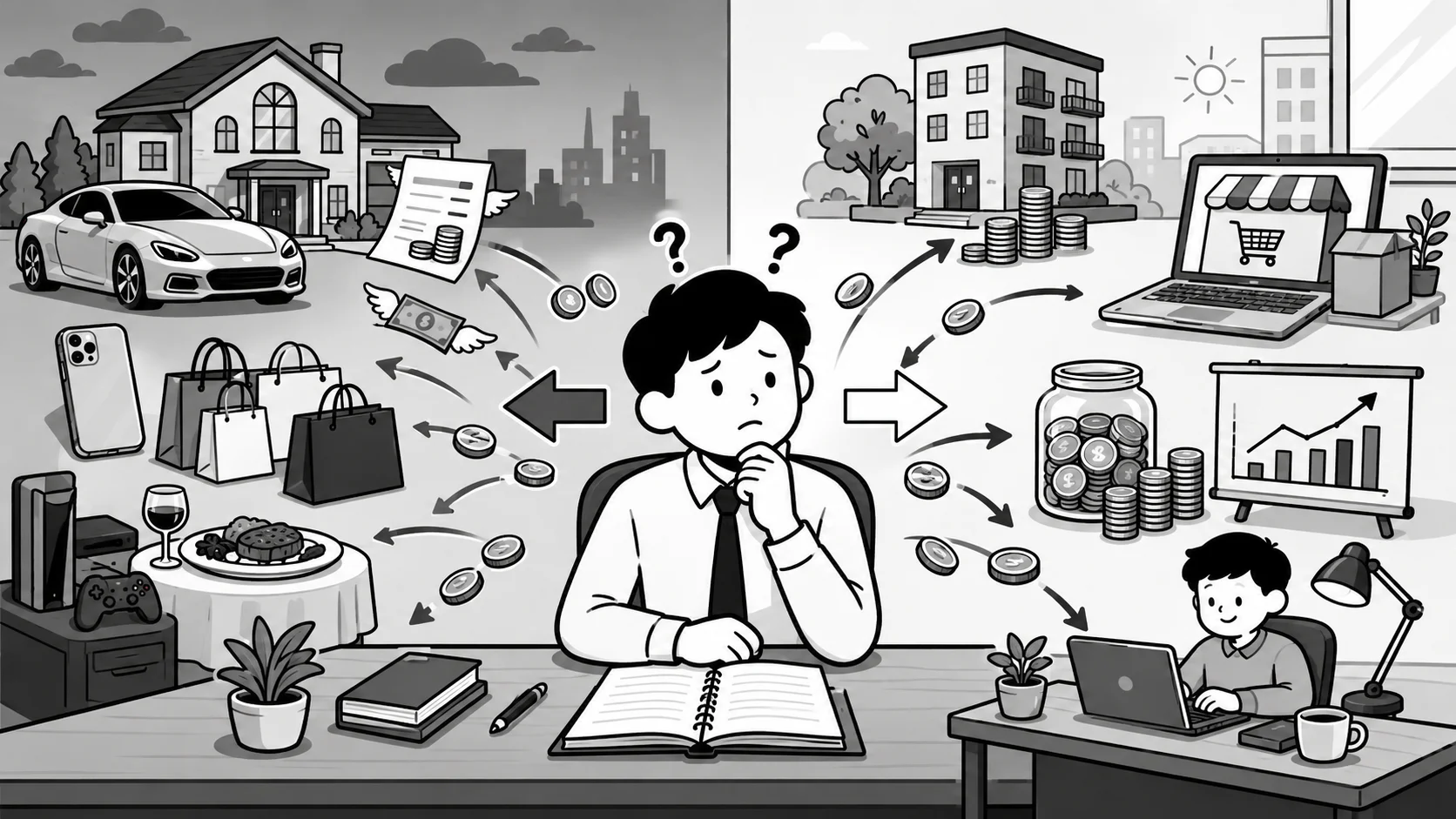
In financial life, this race appears when you work more to earn money, then use that money to pay for expenses, debts, bills, and ever-increasing needs. Because costs are higher, you become more afraid of losing income. Because you fear losing income, you have to keep running.
The loop can go like this:
You fear not having enough money, so you work more. Working exhausts you, so you reward yourself with spending. More spending leaves you short of money again. Being short on money forces you to keep working more.
This is not a matter of personal moral failing. Many people fall into this loop because they were never taught personal finance early on. But once you recognize the loop, you can start to make adjustments.
A rather dangerous misunderstanding is reading Rich Dad Poor Dad and then thinking that being an employee is a failure, that degrees are useless, that stable jobs are something to be discarded. This is an extreme interpretation.
A stable job can be a very important foundation, especially for young people, those raising a family, those without capital or business skills. The problem is not whether you work or not. The problem is whether you use that job to learn more, accumulate more, and build more options for the future.
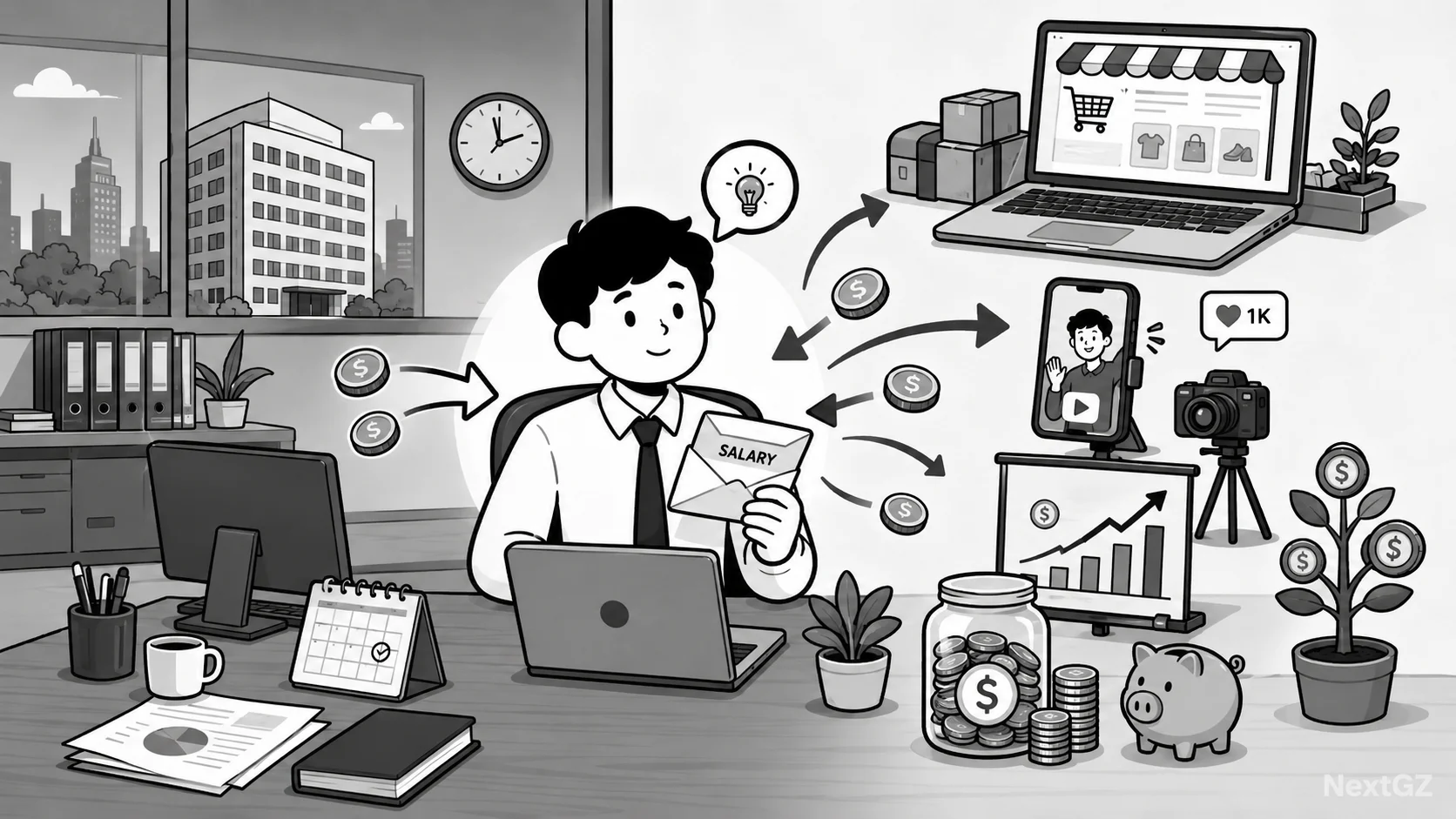
A good job doesn't just pay a salary. It can also help you learn communication, sales, project management, understanding customers, understanding markets, working with data, handling pressure, and building personal credibility.
Practical people won't just ask one question: "How much does this job pay me?"
They also ask: "What kind of person is this job helping me become?"
In Vietnam, many young people are simultaneously working, creating content, doing affiliate marketing, running small businesses, selling digital products, building websites, or trying MMO models. This is a path with opportunities, but also many traps.
The first trap is thinking that just having a "wealth mindset" will make you rich. That's not true. Mindset is only the starting point. You still need skills, discipline, cash flow, market, product, customers, and risk tolerance.
The second trap is chasing promises of fast income. If a course, a tool, or a money-making model guarantees certain results, be cautious. Personal finance should not start with greed, but with the ability to understand risk.

The third trap is spending money to appear as if you are growing. Buying more equipment, more courses, more software isn't wrong. But before buying, ask: does this expense help me create clearer value, or does it just give me temporary peace of mind?
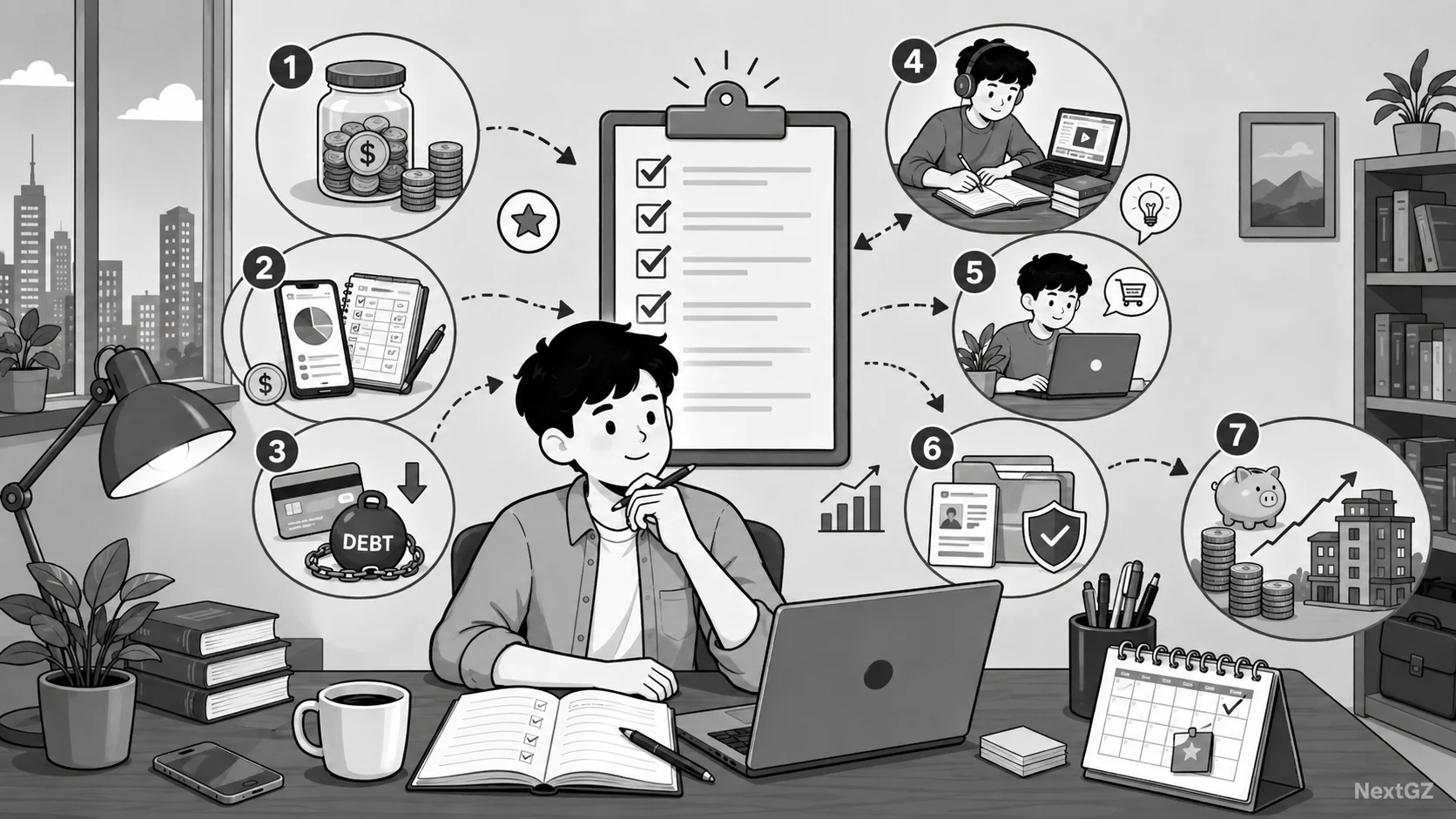
Before thinking about big investments, big business, or "making money work for you," start with very basic steps:
Track your personal cash flow for at least one spending cycle.
Categorize which expenses are necessary, which are rewards, and which are emotional.
Examine what you are buying: do they create more value or more pressure?
Build your earning ability before chasing complex investment channels.
Do not use borrowed money or money needed for living expenses to try high-risk models.
Learn to read terms, fees, interest rates, commitments, and risks before spending money.
Prioritize skills that can generate cash flow: sales, content writing, design, data, marketing, foreign languages, product management, building systems.
The most practical lesson is not "buy assets immediately," but to stop fooling yourself that every purchase makes you richer.
Yes, if you read it with the mindset of learning foundational thinking. No, if you see it as a guaranteed roadmap to wealth.
The book has a huge influence in personal finance, but it has also received many mixed opinions about its oversimplification and some advice criticized for being too vague. Therefore, a safer way to read it is: take the useful concepts like assets, liabilities, cash flow, the rat race; then cross-reference them with your own actual financial situation.
Don't turn a book into an absolute belief. Turn it into a better question for your life.
If you want to hear a more cohesive analysis, you can watch the full video in the playlist Great Finance Books on NextGZ. The video will help you quickly grasp the main spirit of Rich Dad Poor Dad before reading the book or before reviewing how you are currently using money.
The main book to link in this article is Rich Dad Poor Dad: What the Rich Teach Their Kids About Money That the Poor and Middle Class Do Not!,
 Unity
Unity
 Màu Sắc & Ánh Sáng
 Từ vựng theo chủ đề
 Ngữ pháp thực hành
 Ngữ pháp thực hành
 Ngữ pháp thực hành
Đăng ký miễn phí, lấy link riêng và giới thiệu NextGZ cho người cần học tiếng Trung hoặc Digital Art.

Cộng đồng thực chiến
Tham gia nhóm để nhận tài nguyên, cập nhật công cụ và trao đổi cách xây dựng digital business cùng AI.
Tham gia nhóm Zalo
Cộng đồng sáng tạo
Kết nối với cộng đồng Digital Art, chia sẻ tác phẩm và học hỏi quy trình sáng tạo mới.
Tham gia DiscordCộng đồng thực chiến
Tham gia nhóm để nhận tài nguyên, cập nhật công cụ và trao đổi cách xây dựng digital business cùng AI.
Tham gia nhóm ZaloCộng đồng sáng tạo
Kết nối với cộng đồng Digital Art, chia sẻ tác phẩm và học hỏi quy trình sáng tạo mới.
Bình luận
0 bình luận
Đăng nhập để tham gia thảo luận cùng cộng đồng!
Đăng nhập ngayĐang tải bình luận...