A brightly lit snack shop, shelves fully stocked, and customers constantly coming and going can create the impression that this is a business model which is very easy to turn a profit.
The products aren't overly complex. The prices are affordable. The customer base ranges from school pupils and university students to office workers and families with young children. The goods are also of the type that are easy to buy, easy to use, and have the potential for repeat purchases.
But behind the image of a busy store lie three completely different financial stories:
The sales amount paid by consumers at the store.
The revenue of the company owning the brand and supply chain.
The actual profit left for the person who directly opened the point of sale.
Without separating these three figures, an observer can very easily look at the scale of the entire system and then assume that every store underneath is making a lot of money.
Where do discount snack shops actually make money from?
The discount snack shop model doesn't just make money by buying a pack of biscuits at a low price and then reselling it at a higher price.
A complete business machine typically includes:
The brand and franchise system.
The product selection department.
The ability to purchase in large volumes.
The warehousing and transportation system.
The store's ordering platform.
The network of local points of sale.
Sales data and inventory replenishment forecasting.
At the store level, revenue comes from the end consumer.
At the enterprise level, revenue can come from selling goods to franchisees, franchise service fees, operational support, and related activities.
In other words, a snack conglomerate doesn't necessarily have to stand behind the counter selling individual packets of biscuits. They can make money by becoming a distribution center for tens of thousands of stores all using the same system.
The scale of the two leading snack retail systems
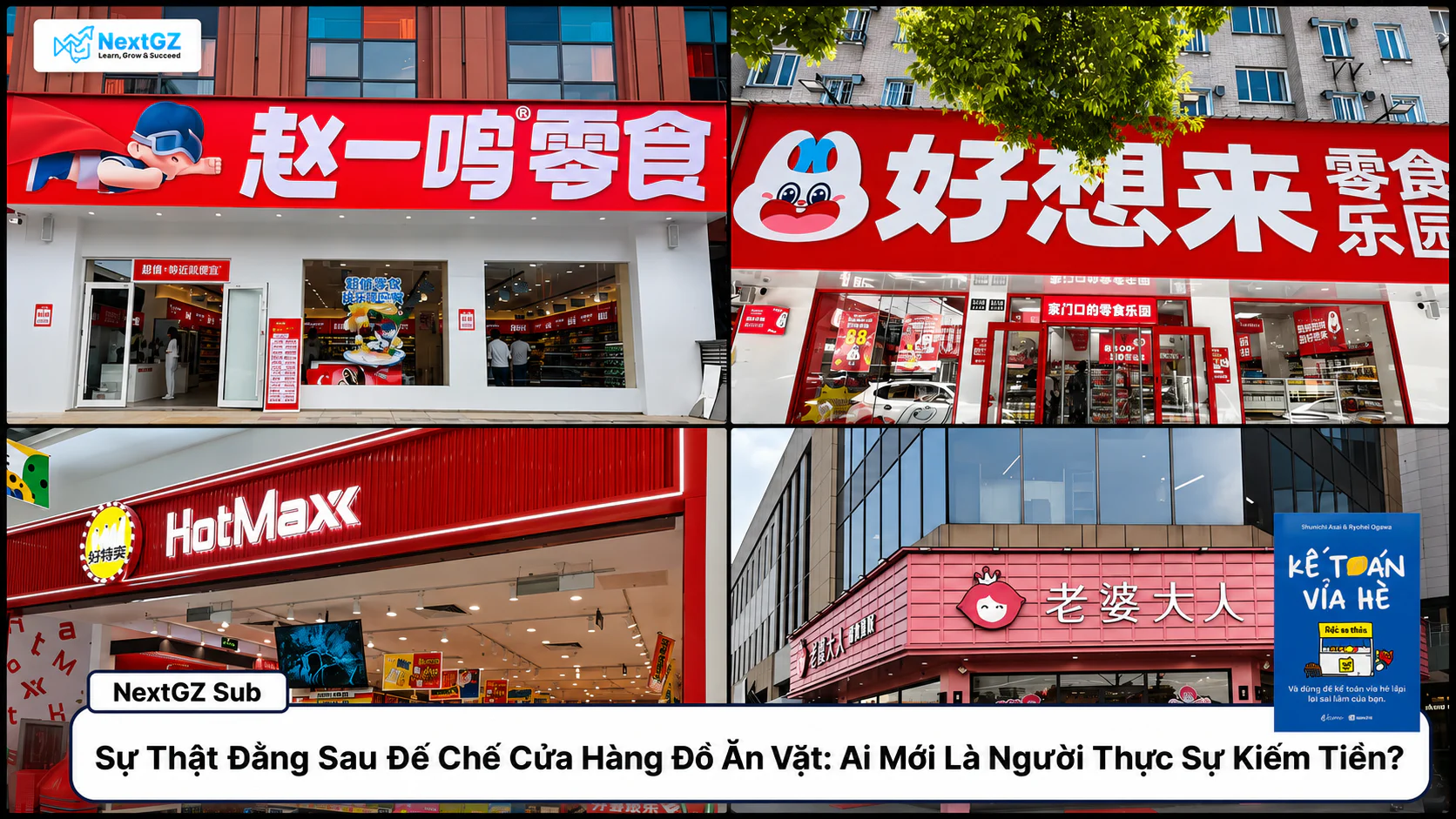
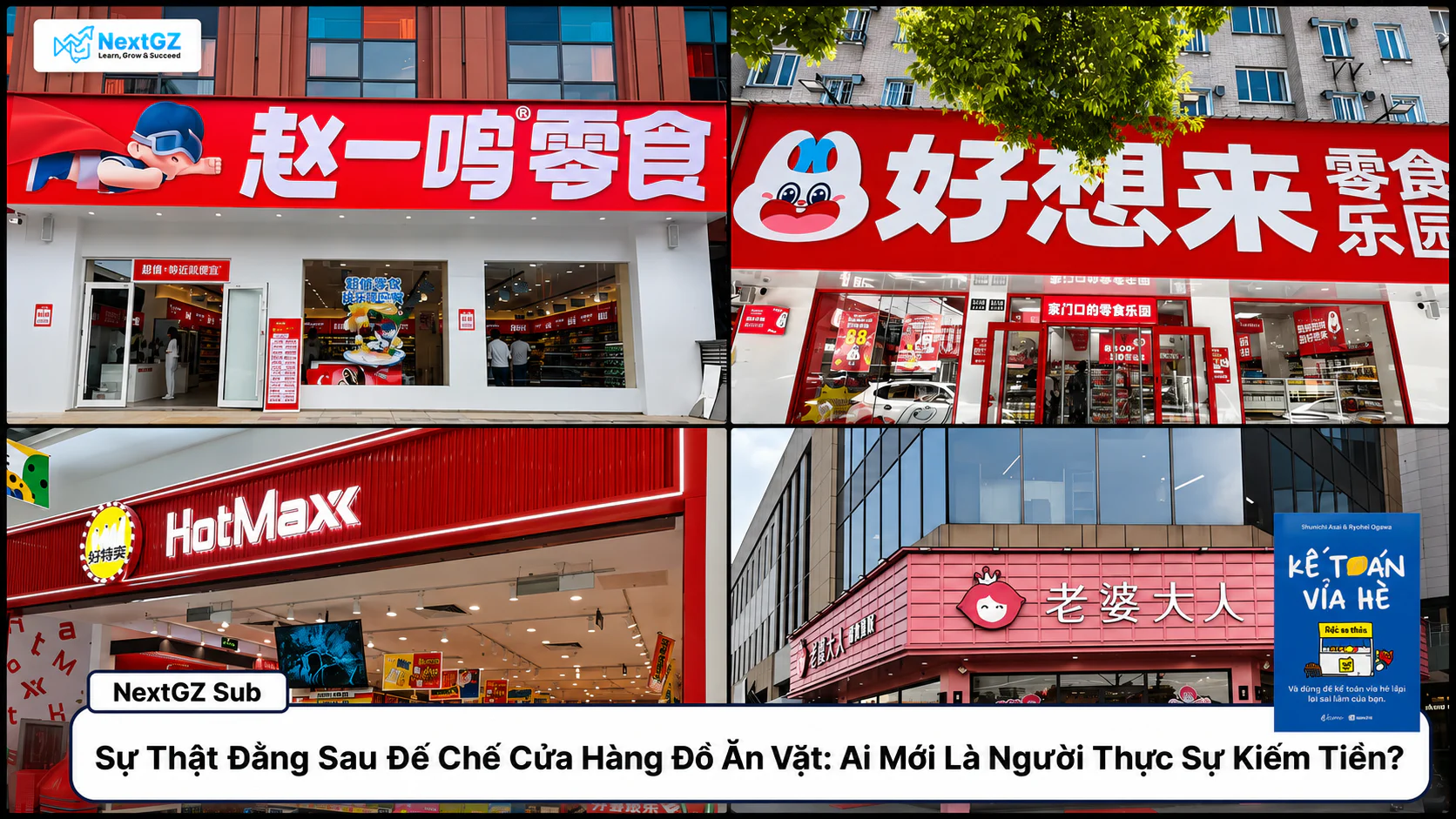
The discount snack market in China once grew rapidly with many different brands. Among them, two prominent networks are Busy Ming Group and Wanchen Group.
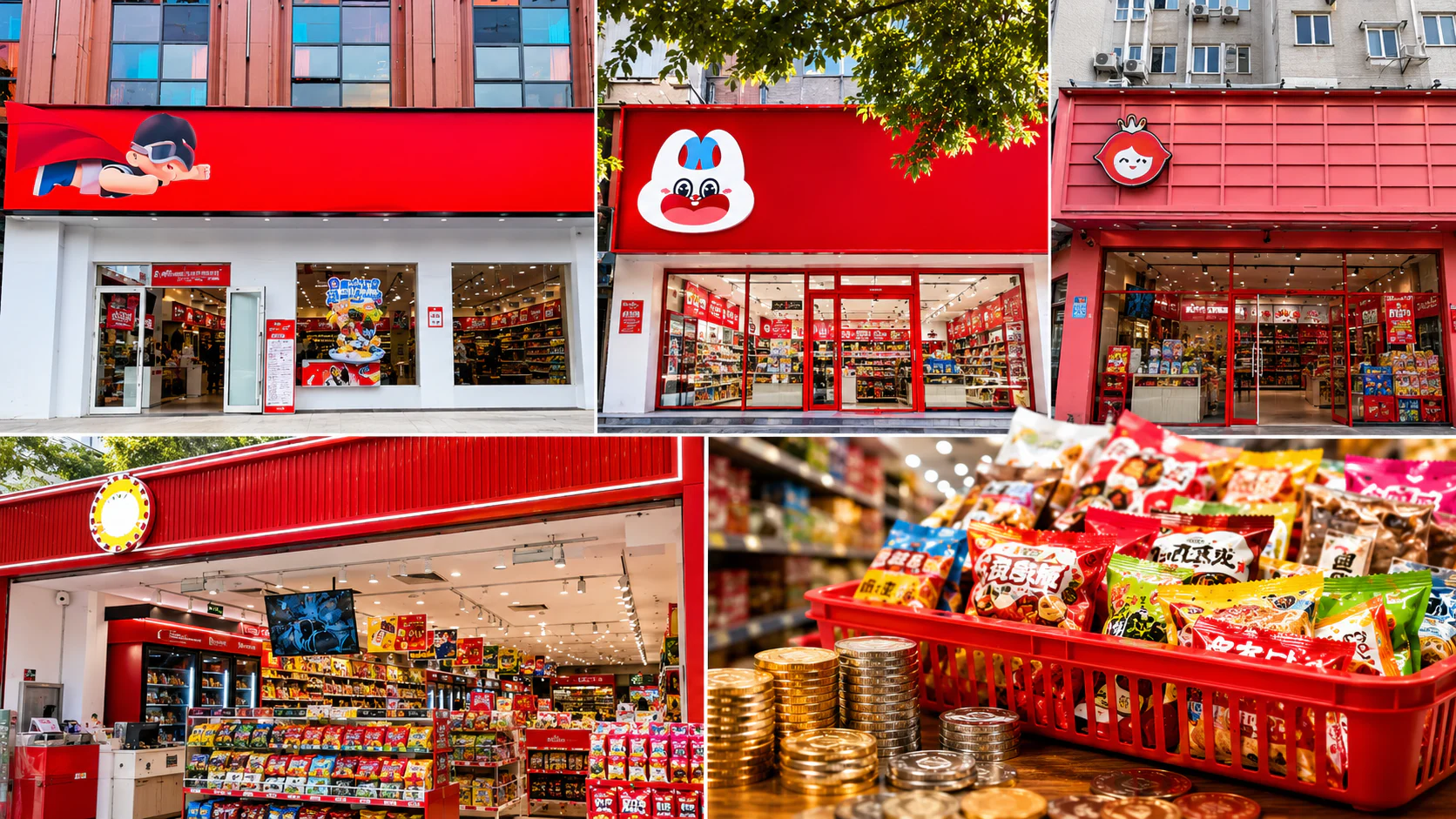
Busy Ming Group operates two main brands: Snack Is Busy, the Chinese name is 零食很忙, and Zhao Yiming Snacks, for which the enterprise uses the English name Super Ming.
According to a 2025 report, Busy Ming had 21,948 stores, of which 21,927 operated under the franchise model. Thus, franchised stores accounted for approximately 99.9% of the network. The total value of goods traded within the system in 2025 reached approximately 93.57 billion RMB.
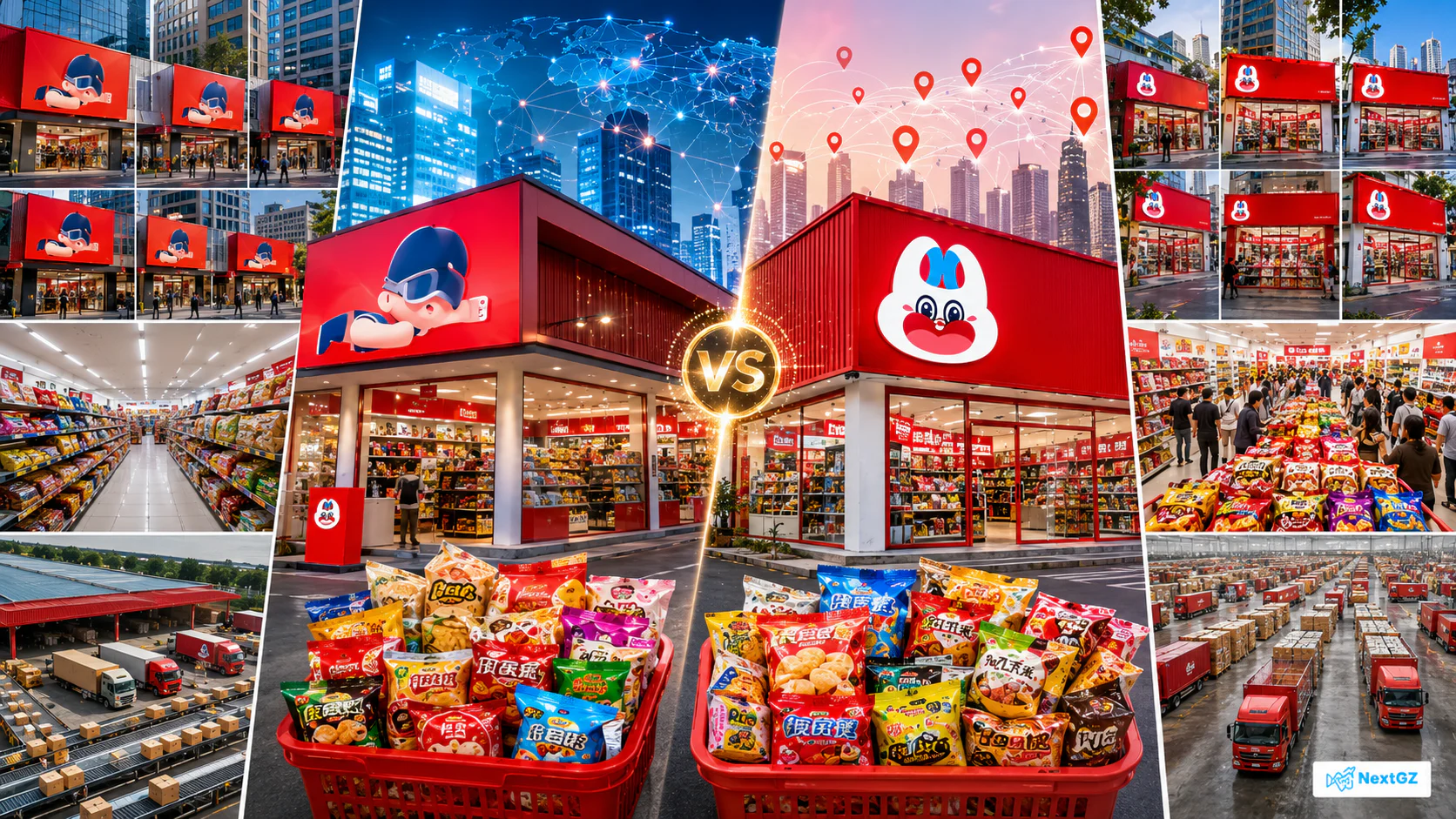
Wanchen Group, behind the Haoxianglai system and related brands, had 18,314 stores by the end of 2025. By the end of February 2026, the number of announced points of sale had exceeded 19,500. The group's revenue for 2025 reached approximately 51.46 billion RMB, while the total retail value of the snack segment exceeded 73.3 billion RMB.
Combined, the two systems owned over 40,000 points of sale by the end of 2025. However, the large scale of the network does not mean every store yields the same result.
A store in a good location, with reasonable rent and high customer density, can operate efficiently. Another store of the same brand but located near too many competitors, with high costs or a wrong site selection, can still face difficulties.
The brand doesn't just make money from franchise fees
Many people think that a franchising business mainly makes money by selling the right to use the brand.
In reality, for large-scale snack retail chains, the goods supplied to the stores are a very important source of revenue.
Busy Ming's report indicates that the majority of the group's revenue comes from:
Revenue from goods sales alone in 2025 reached approximately 65.66 billion RMB, growing strongly alongside the expansion of the point-of-sale network.
Wanchen Group also recorded revenue from direct store retail, wholesale of goods to franchised stores, and franchise fees. The company's report clearly describes that revenue from goods is recognized after transfer to the franchisee store.
This creates a relatively clear growth mechanism:
The more stores opened, the more customers the system has for stocking up. The more goods circulated, the greater the revenue for the supply enterprise.
Therefore, the brand isn't just selling a name. They sell an entire product catalog, ordering technology, logistics, display procedures, and an operating system.
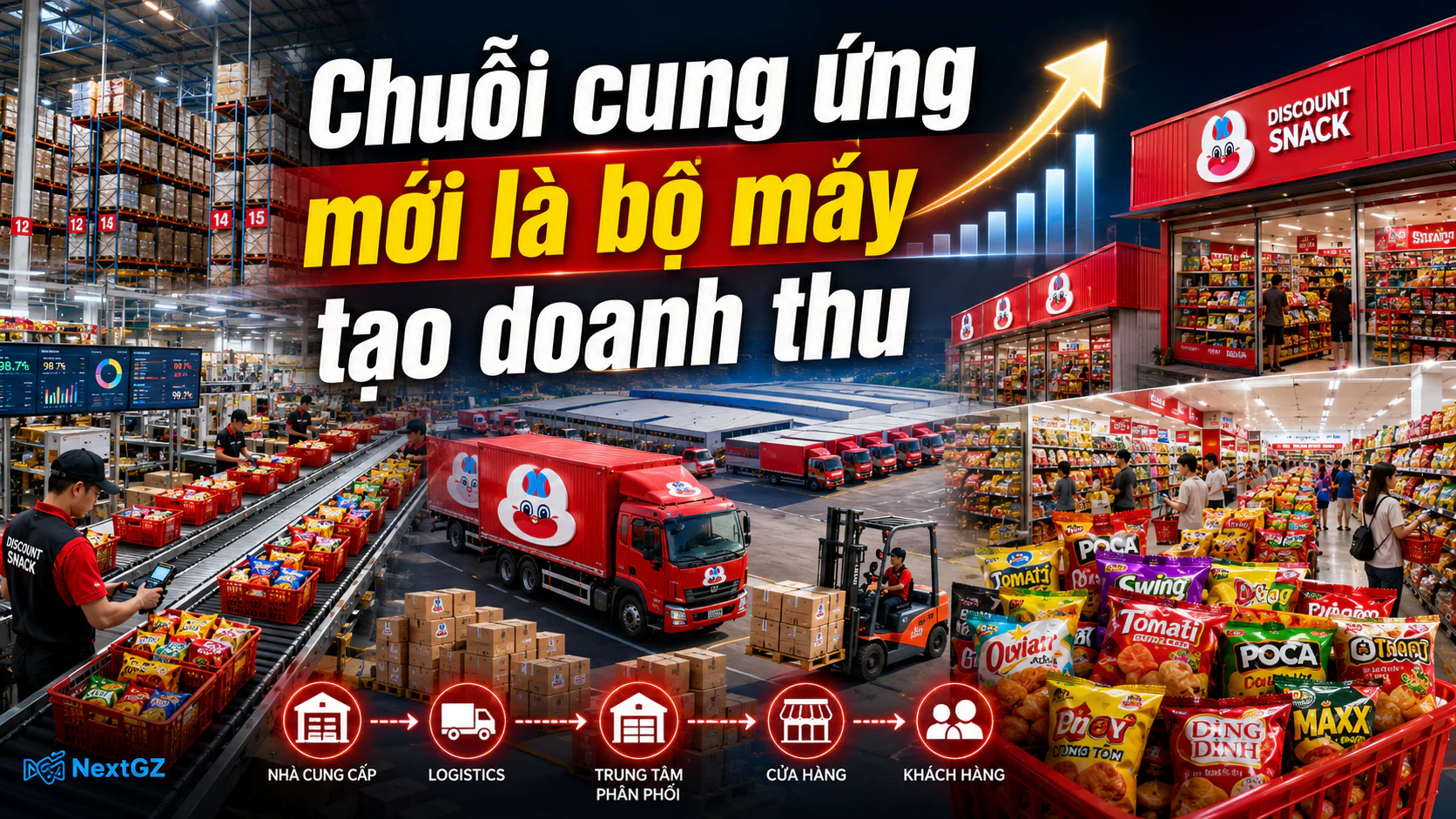
The supply chain is the real revenue-generating engine
Discount snack shops can display thousands of products. Busy Ming states that each store in the system is typically required to maintain a minimum of approximately 1,800 SKUs, ranging from biscuits, candies, nuts, instant food to beverages.
An independent store would struggle to negotiate with hundreds of manufacturers to get good prices.
But a network with tens of thousands of stores can aggregate demand into very large purchasing volumes. That scale allows the enterprise to:
Buy directly from manufacturers or brand owners.
Reduce intermediary layers.
Negotiate prices, specifications, and delivery schedules.
Develop private label products or packaging.
Distribute goods based on regional demand data.
Increase inventory turnover speed.
Busy Ming's report identifies supply chain optimization, direct purchasing, and scale advantages as key factors helping the enterprise control purchasing costs. The group also continues to invest in replenishment forecasting, store operations diagnostics, and data-driven coordination.
This is the core of the model:
On the surface, it's a snack shop, but inside, it's a data- and scale-driven fast-moving consumer goods distribution enterprise.
Why can in-store prices be low?
Low prices don't necessarily mean the enterprise is accepting losses across the entire catalog.
A retail chain can reduce prices in several ways:
Purchasing in large volumes.
Working directly with manufacturers.
Reducing intermediary distribution layers.
Optimizing packaging and product sizes.
Increasing turnover speed.
Limiting investment in premium shopping spaces.
Using some low-margin products to attract customers.
According to information in Busy Ming's listing documents, the system's product prices are estimated to be about 25% lower than comparable products in traditional supermarkets. This is one of the factors helping the chain attract price-sensitive buyers.
However, low prices are only sustainable when the enterprise has sufficient scale and turnover speed. An independent store applying the same price level but without the corresponding purchasing advantages could quickly thin its profit margins.
Traffic-driving products create the perception that the whole store is cheap
When entering a store, customers often see familiar products like soft drinks, mineral water, milk, or bottled beverages in prominent positions.
These are items for which consumers have a good price memory. They have seen them at convenience stores, supermarkets, or e-commerce platforms.
If the price of a familiar bottle of water is lower than expected, customers can quickly form a conclusion:
"This store sells cheap stuff."
That product becomes a traffic-driving product. The goal isn't necessarily to generate high profit from that item itself, but rather to:
Attract shoppers to enter.
Create visual proof of the price level.
Reduce the psychological tendency to compare prices on other items.
Encourage customers to pick up additional unplanned products.
Therefore, when analyzing a store, one shouldn't just look at the margin on a few prominent products. You need to look at the average transaction value, the category mix, and the customer return rate.
How do products sold by weight or in bulk affect purchasing decisions?
Many snack shops use small packaged products or sell by weight.
This selling method has several psychological advantages:
Customers can try many different items for a small amount of money.
Each individual item feels inexpensive.
The bag looks full and diverse.
Shoppers find it hard to calculate the total cost immediately as they keep adding more.
The price per unit is less memorable compared to major brand items.
A bottle of water has a fixed price that is relatively easy to compare. But with many small items weighed together or priced individually per pack, customers struggle to estimate the exact total before checkout.
That doesn't mean every product sold by weight yields high profit. Profit margins also depend on purchase price, wastage, shelf life, promotions, and the rate of items that need to be handled.
But in terms of shopping behavior, selling in small quantities helps lower the barrier to trying a product and increases the likelihood that customers will buy multiple types in one go.
The lipstick effect and the demand for low-cost self-rewards
One explanation often mentioned in retail is the lipstick effect.
This concept describes the hypothesis that when economic conditions are tough, consumers may cut back on big-ticket expenses but still maintain some moderately priced self-reward purchases.
Instead of buying new electronics or going on long trips, a person might choose:
However, the lipstick effect should only be seen as a way of interpreting consumer behavior, not an absolute economic indicator. Studies and data from different recessionary periods don't always yield the same results.
With snacks, the appeal lies in the feeling of getting a lot of enjoyment for a relatively small amount of money. The buyer can walk away with a full bag of products without feeling like they just made a major expenditure.
How does system revenue differ from store profit?
This is the most important point when evaluating a franchise model.
GMV is not enterprise revenue
GMV is the total value of goods sold through the store network. It reflects the scale of transactions, but not the total amount the enterprise retains.
Enterprise revenue is not profit
The group's revenue can come from goods sold to franchisees and service fees. The enterprise still has to deduct cost of goods sold, logistics, warehousing, personnel, technology, and marketing.
Group profit is not store profit
The franchisee has its own cost structure:
Therefore, a group announcing tens of billions of RMB in revenue does not prove that every franchisee is highly profitable.
Metric | What does it reflect? | What does it NOT directly tell you? |
|---|
System-wide GMV | Total value of customer purchases | Group profit |
Group revenue | Money recorded by the enterprise | Money retained by the store owner |
Group profit | Parent company's efficiency | Each point of sale's efficiency |
Store revenue | Sales value at a single location | Profit after all expenses |
Store cash flow | Actual cash in and out | Long-term brand value |
Risks the franchisee must bear
The franchise model helps the store opener access a standardized brand, products, and system. In return, the franchisee often has to accept many constraints.
Location risk
A crowded location isn't necessarily suitable if:
Rent is too high.
People are just passing by but rarely stop.
There's no parking.
Goods delivery is difficult.
The area already has too many competitors.
Internal competition risk
If the brand opens too many points of sale close together, revenue can be divided. Therefore, it's necessary to clarify the area protection policy and the minimum distance between stores.

 Shopee









Bình luận
0 bình luận
Đăng nhập để tham gia thảo luận cùng cộng đồng!
Đăng nhập ngayĐang tải bình luận...