Long Lines at Stores Can Still Lose Money: Marketing Mistakes Many Business Owners Are Making
Many customers don't necessarily mean profit. Learn how to design promotions, protect profits, and build a marketing system with Allan Dib's book.

YouTube
1:04 ước tính · Chưa có giọng vi-VN
A store launches an extremely low-price promotion. The next day, customers line up in a long queue outside. From the outside, this seems like a successful campaign: the store is packed, orders surge, daily revenue is higher than usual, and many people start filming videos to share on social media.
But just a few hours later, things take a completely different turn.
The preparation area cannot keep up with service. Staff cannot handle the volume of customers. Giveaways run out before the program ends. Customers have to wait too long, so they start complaining, filming videos, and leaving negative reviews. Revenue might increase that day, but the store's reputation is damaged.
This is a business situation shared from the Chinese market. The specific numbers and execution methods should not be copied directly in Vietnam. However, the principle behind the story is well worth pondering for store owners, online sellers, and small businesses:
A crowd of customers does not equal money. A crowd of customers is first and foremost a test for the entire business system.
If the system can handle the new customers, the promotion can become a growth lever. But if the system lacks the capacity to serve, a sudden surge in customers will only magnify existing weaknesses.
Higher Revenue Does Not Mean Higher Profit
One of the most common mistakes new business owners make is using revenue to judge the overall effectiveness of a marketing campaign.
Revenue only shows the total amount of sales recorded. It does not fully reflect the costs of goods, giveaways, discounts, labor, shipping, platform fees, advertising costs, damaged goods, returned orders, or customer compensation.
To know whether a campaign is truly effective, business owners need to clearly distinguish four concepts.
Revenue is the total value of goods or services sold.
Cash collected is the actual amount the business has received. This figure can differ from revenue if customers pay late, pay through platforms, or orders are held for reconciliation.
Gross profit is revenue minus the cost of goods sold.
Net profit is what remains after further deducting operating costs, advertising, personnel, rent, promotions, taxes, and other incidental expenses.
Suppose a store has an average order value of 120,000 VND. The product cost is 45,000 VND. After subtracting an additional 20,000 VND for giveaways, 15,000 VND in incidental service costs, and 5,000 VND in payment or platform fees, the store is left with only 35,000 VND before accounting for rent, utilities, fixed salaries, and taxes.
If a discount program then takes another 30,000 VND per order, the store is left with almost no profit margin. Doubling the number of orders might make revenue look great, but the workload increases sharply while actual profit does not increase correspondingly.
More seriously, if customer volume exceeds service capacity, the business also faces bad reviews, refunds, and the risk that customers will not return.
Promotions Are Not Just About Bringing People to the Store
Many business owners start a campaign with the question: “How do I get a lot of people to come?”
That is not the most important question.
The right question should be: “After customers arrive, can my system serve them and create long-term business value?”
An effective promotion usually needs to have four interconnected links: the attraction factor, profit protection rules, service capacity, and a post-first-transaction value creation plan.
The Attraction Factor Must Direct Customers to a Specific Action
Giveaways or low prices are just opening tools. The business needs to know exactly what action they want the customer to take after seeing the offer.
A free drink at a restaurant can be used to encourage customers to sit down and order more food. A small gift at a home goods store can be tied to a minimum order value condition. A coupon for the next purchase can create a reason for customers to return within a certain period.
If the business only gives away products without getting a valuable action in return, that campaign can easily become a pure expense.
Rules Must Protect the Profit Margin
The more attractive a campaign, the more it needs clear conditions.
Businesses can limit the number of offers per day, apply them only to selected products, set a minimum spend, restrict one offer per customer, or split the campaign into different time slots.
The purpose of these rules is not to make things difficult for customers. They help the business forecast costs, prepare inventory, and prevent a small group from consuming the entire promotional budget.
Rules also need to be clearly communicated from the start. A condition hidden in fine print may protect the business in the short term but will erode customer trust.
Operational Capacity Must Be Calculated Before Marketing
Advertising can bring hundreds of people to a store in one afternoon, but advertising cannot automatically make the kitchen faster, the warehouse larger, or the staff more attentive.
Before running a campaign, businesses should identify some basic operational limits: how many orders can be processed per hour, how many customers the inventory can serve, what the maximum wait time will be, who handles complaints, and under what circumstances the campaign will be paused.
Sometimes, a campaign limited to 100 customers that delivers a great experience is more valuable than a campaign attracting 500 customers and disappointing most of them.
The Follow-Up Plan Must Give Customers a Reason to Return
The first transaction does not necessarily have to generate all the profit, but it must open the door to a valuable business relationship.
After the first purchase, the business can invite customers to join a membership program, receive notifications about suitable products, use a coupon for the next visit, or introduce complementary products. Collecting and using customer information must be transparent, with the customer's consent, and only for stated purposes.
When there is no next step, the business will have to keep spending on advertising to acquire the same number of new customers repeatedly. This is an expensive and unsustainable loop.
From a Single Promotion to a Complete Marketing Plan
The problem for many small businesses is not that they don't do marketing. The problem is that they carry out many scattered activities without placing them in a unified system.
Run an ad today. Discount tomorrow. Give away gifts next week. Hire someone for content the following month. Each activity may produce a few results, but no one knows what goal they serve, how they connect, or what metrics to use to measure them.
This is exactly the problem that the book The 1-Page Marketing Plan: The Easiest, Most Proven Way to Get More Customers, Make More Sales, and Grow Your Business Faster by Allan Dib sets out to solve.
Instead of asking businesses to write a plan dozens of pages long, Allan Dib condenses the marketing process into nine boxes on a single page. The Vietnamese edition is published by Alpha Books, translated by Le Thi My Linh, published by Labor Publishing House, and has 336 pages.
The planning framework is divided into three stages corresponding to the customer journey: before they become a prospect, while they are considering a purchase, and after they have become a customer. Each stage consists of three components, forming the nine boxes of the plan.
The Stage Before Customers Know You
The first stage focuses on three questions: who do you want to serve, what will you say to them, and how will you reach them.
Choose the Right Target Market
A “discount for everyone” campaign may sound appealing but is often very difficult to control. When trying to attract everyone, a business may spend money reaching people who have no need, are not a good fit for the product, or only buy once because of the low price.
A restaurant near an office area, for example, could focus on employees within a two-kilometer radius who need a quick lunch, have a specific budget, and prioritize consistency over an overly large menu.
Once the audience is clear, the message, product, and service process become easier to design.
Craft a Message That Resonates with the Customer's Problem
“50% off” only describes the price. It doesn't tell the customer why the product is right for them.
A good message should link the offer to a specific need. For example: “A complete lunch, served in 15 minutes for office workers” may appeal more to the target group than a generic ad like “Cheapest in the area.”
Customers don't just buy products. They buy convenience, time saved, peace of mind, or the results the product helps them achieve.
Choose the Right Channels
Not every business needs to be on every platform.
A store serving local customers might prioritize online maps, local community groups, short videos, and referral programs. A business selling highly specialized products might need tutorial content, direct consultation, and a longer-term email nurturing sequence.
Communication channels should be chosen based on where your target customers actually appear, not based on which platforms are trending.
The Stage of Turning Interested People into Buyers
The second stage of the plan involves capturing leads, nurturing relationships, and converting them into buyers.
This is the part that many discount campaigns skip.
Advertising can make customers see the campaign, but the business still needs a mechanism to help customers take the next step. That could be booking a table, registering for a discount code, messaging for consultation, or preselecting a pickup time slot.
With the customer's permission, the business can continue providing useful information, answering questions, and helping them understand the product before asking them to buy.
The conversion process also needs to remove unnecessary obstacles. Pricing, offer conditions, delivery times, return policies, and usage instructions must be clearly presented. The more vague information, the higher the rate of customer abandonment.
The Stage After the Customer Has Purchased
Many people think marketing ends when the customer pays. In reality, this is when the business has the opportunity to create a sustainable advantage.
The last three boxes in Allan Dib's model focus on customer experience, lifetime value, and referral activities.
The post-transaction experience determines whether customers return. A promotion may bring customers in for the first time, but product quality, service speed, and how the business handles issues determine the long-term relationship.
Once customers are satisfied, the business can introduce complementary products, suitable service packages, or membership benefits. This is not about upselling at all costs. The goal is to help customers achieve better results while increasing the economic value of the relationship.
Referral activities should not be left to chance either. Businesses can proactively ask for reviews after a positive experience, build a transparent referral program, or offer benefits to both the referrer and the referee.
Applying the One-Page Plan to a Promotion
Let's imagine a restaurant preparing to launch a low-price program to attract new customers.
If thinking only in terms of promotion, the restaurant might post a “flat rate” video and wait for customers to pour in.
But using the one-page marketing plan mindset, the owner would start by identifying exactly who to attract. That might be office workers in the area, who usually eat lunch from 11:30 AM to 1:00 PM and need fast service.
The campaign message would not revolve solely around low price. It could emphasize a complete meal, estimated service time, and a daily limited quantity.
Channels would be chosen based on where this group appears, such as nearby office communities, online maps, or short-form content targeted by location.
Instead of letting customers all come at once, the restaurant could require them to select a time slot in advance. This helps customers secure the offer while helping the store forecast the number of orders to prepare.
The restaurant should also limit portions, standardize a few easy-to-prepare dishes, organize a pickup area, and prepare a plan for handling overload. This is the “capacity” part that many campaigns overlook.
After customers use the offer, the store could send a return coupon valid for a reasonable period, invite them to join a membership program, or ask for a review once they've had a good experience.
At that point, the offer is no longer a standalone discount. It becomes the first point in a pre-designed journey.
Who Is This Book For?
The 1-Page Marketing Plan is especially suitable for small business owners, store managers, marketing staff, online sellers, and anyone who is running many promotional activities but lacks a unified system.
The description on Alpha Books' site describes the book's method as nine squares on a single page, aimed at simplifying the process of building and executing a marketing plan. The publisher also positions the book for business owners, marketing managers, marketing staff, and those who want to learn how to make a plan.
The book is not a guaranteed revenue formula, nor can it replace calculating costs, managing personnel, or improving product quality.
Its greatest value lies in helping readers stop ad-hoc marketing activities and see the entire process as a system: find the right people, deliver the right message, turn interest into transactions, serve well, and create reasons for customers to return.
Don't Just Ask How to Attract Customers
Before running your next campaign, take time to answer four questions:
Which customers are truly a good fit for your product? What rules will keep the campaign from eroding profit? Can your current system handle the volume of customers attracted? And after the first purchase, what does the business get back besides a revenue figure?
When these questions have no answers, the bigger the campaign, the higher the risk.
Conversely, when you have a clear plan, a promotion is no longer a discounted gamble. It becomes a deliberate part of a system for attracting, converting, and retaining customers.
If you are in business but still feel that marketing is a jumble of too many scattered concepts, tools, and tactics, The 1-Page Marketing Plan: The Easiest, Most Proven Way to Get More Customers, Make More Sales, and Grow Your Business Faster is a book worth reading and practicing alongside your current business operations.
This product is available at the FAHASA Online store on Shopee; the product page shows a Shopee Mall badge and authentic product information at the time of verification. Price, vouchers, and shipping policies may vary depending on account, delivery address, and time of purchase.
Article categories
Đánh giá bài viết
More from author

 Unity
UnityUnity prototype sạch ngay từ ngày đầu: thư mục, assembly boundary và quy tắc đặt tên cho indie team
Three.js từ trang trắng đến scene 3D đầu tiên: camera, renderer, ánh sáng và vòng lặp animation
Godot prototype đầu tiên: hiểu Scene, Node và Resource bằng một mini game có thể mở rộng

 Màu Sắc & Ánh Sáng
Procreate Selection nâng cao: Feather, Save & Load, Color Fill và ColorDrop cho flat màu sạch
You might also like
 Phân Tích Kinh Doanh
Thiên Kiến Tỷ Lệ Trong Marketing: Cách Giá Cả Thay Đổi Cảm Nhận Khách Hàng
 Phân Tích Kinh Doanh
Costco, Luckin Và Mixue Thực Sự Kiếm Tiền Ở Đâu?
 Phân Tích Kinh Doanh
Không Ai Dạy Bạn Kinh Doanh? Hãy Rèn 5 Tư Duy Này Để Nhìn Ra Cơ Hội
 Phân Tích Kinh Doanh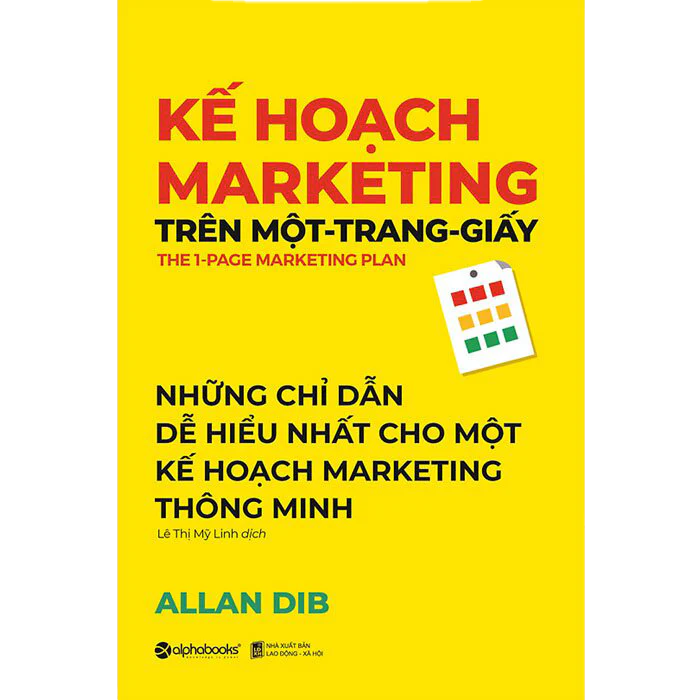
 Shopee

Bình luận
0 bình luận
Đăng nhập để tham gia thảo luận cùng cộng đồng!
Đăng nhập ngayĐang tải bình luận...