OpenAI grants Codex to 2,000 researchers in Genesis Mission: What does the new commitment include?
OpenAI announces $4 million in Codex access for about 2,000 researchers, API support for two scientific campaigns, and selective access to GPT‑Rosalind.
1:04 ước tính · Chưa có giọng vi-VN
On July 22, 2026, OpenAI announced a new set of commitments for the U.S. Department of Energy's Genesis Mission, bringing frontier models, Codex, and API infrastructure closer to the daily work of national laboratories and universities. What stands out is not just the scale of support, but how the program divides resources into two layers: providing widespread tools for thousands of researchers and concentrating computational power on a few large-scale scientific campaigns.
According to the official announcement, OpenAI will provide $4 million in Codex access for approximately 2,000 researchers within the Genesis Mission. The company also commits $3 million in API support for two major science campaigns, and offers up to $10 million in API usage when participating entities spend $2.5 million. These are product access and usage support and should not be interpreted as cash grants of equivalent value.
What has OpenAI committed to the Genesis Mission?
The Genesis Mission is a program coordinated by the U.S. Department of Energy, connecting 17 national laboratories, universities, and businesses. The program aims to pair AI with federal scientific data, supercomputers, simulations, experimental facilities, and researcher expertise. OpenAI says it will support the program through five commitment groups.
- Providing $4 million in Codex access to approximately 2,000 researchers at national laboratories and universities.
- Dedicating $3 million in API support for two large-scale science campaigns.
- Allowing participating teams to receive up to $10 million in API usage value when spending $2.5 million.
- Granting selective access to GPT‑Rosalind for some qualified biology researchers.
- Offering early access to appropriate models or capabilities to select laboratory leaders and cybersecurity experts, within a trusted and controlled scope.
The announcement does not specify the end date for each package, how resources are distributed in detail among laboratories, or a full list of models to be used. Therefore, the figures above should be understood as published commitment ceilings, not actual consumption incurred.
Codex will be used as a research tool, not just for writing code
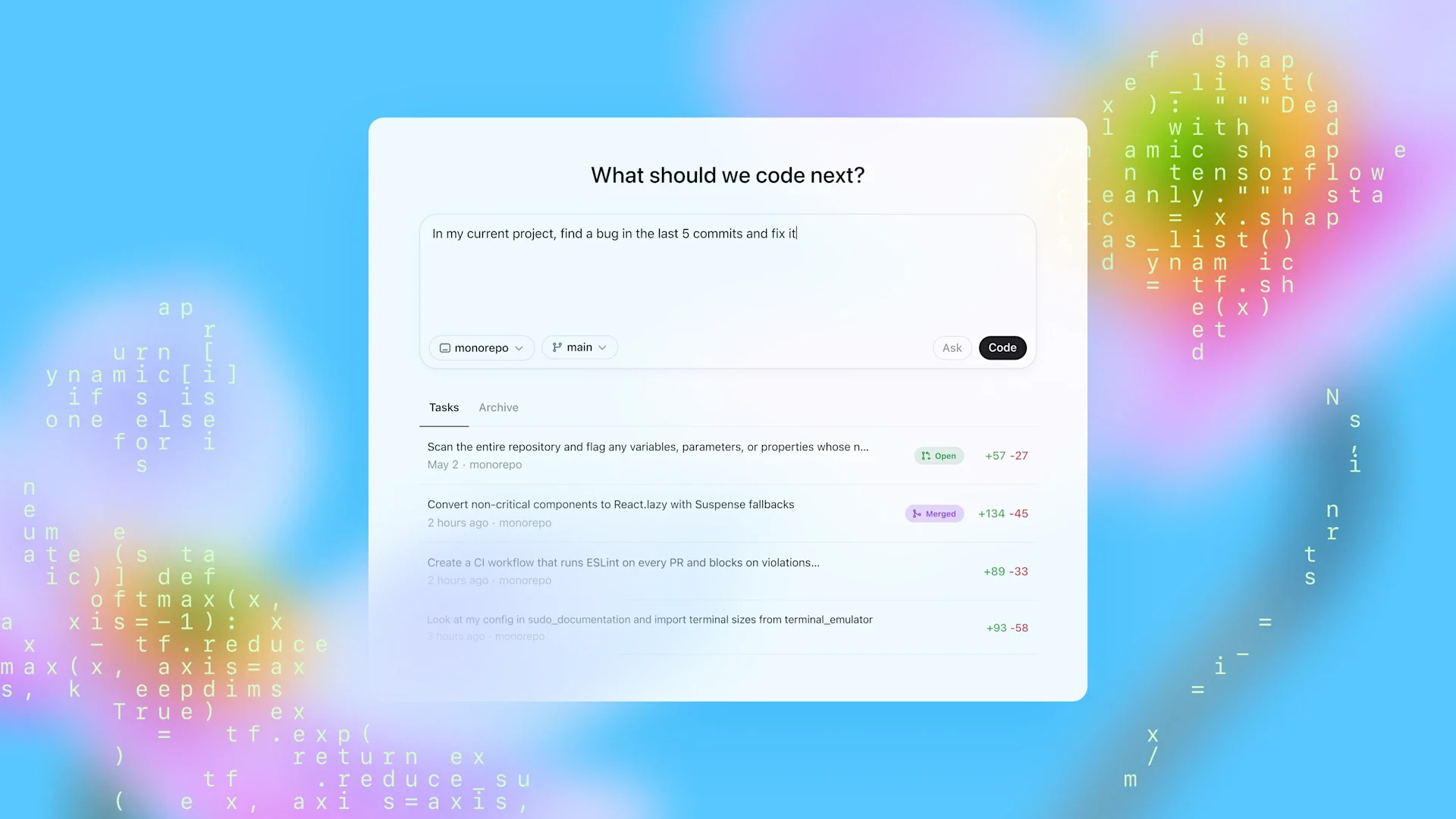
Bringing Codex to approximately 2,000 researchers shows OpenAI wants to place a programming and reasoning assistant very close to scientific work: data preparation, building analysis pipelines, testing simulation code, automating digital experiments, and logging reproducible workflows. If you want to understand the current capabilities of the model family and Codex, you can read more in the article GPT‑5.6 and the shift from chatbot to working AI.
However, tool access does not automatically produce correct scientific results. AI-suggested code still needs to undergo testing, input data validation, comparison with standard methods, and domain expert evaluation. In a lab environment, a piece of code that runs does not mean the physical model, statistical assumptions, or conclusions drawn from it are valid.
From AI Jam Session to everyday research workflows

OpenAI says the new commitments follow the AI Jam Session previously held at nine national laboratories. Over 1,000 scientists used frontier models to test domain-specific problems, evaluate answers, and send structured feedback. The new program expands that thinking: instead of a one-day focused trial, tools are integrated into longer-term workflows.
This shift is important because the value of AI in science often doesn't come from a single impressive answer, but from hundreds of small, controlled tasks: reading documents, linking data, writing code, generating hypotheses, detecting contradictions, and suggesting the next experiment. Actual effectiveness will depend on whether research teams build rigorous evaluation sets, change logs, and approval mechanisms.
What problems will the two major science campaigns target?
OpenAI states the two initial campaigns are expected to focus on high-temperature superconducting materials and the "Atlas of the Machine-Accessible Frontier." The first campaign will combine AI, simulation, materials expertise, and experimentation to find superconductors that operate at higher temperatures and more practical pressures. Progress here could impact energy, transportation, medicine, and scientific instruments.
The second campaign is methodological: identifying problems where AI can significantly assist using existing knowledge, data, and computational power, while also pointing out questions that still require evidence from the physical world. This is a crucial boundary, as models can synthesize and reason over data quickly but cannot replace measurement when necessary data does not exist.
OpenAI has not yet disclosed project selection criteria, evaluation milestones, lead units for each campaign, or how the $3 million API support will be divided. No new scientific results from these two campaigns have been reported yet.
GPT‑Rosalind and the challenge of AI in bioscience

A sensitive part of the announcement is access to GPT‑Rosalind for some researchers at national laboratories working on eligible biology projects. OpenAI describes this as a specialized capability for bioscience, but has not publicly disclosed its architecture, version, independent benchmarks, or specific access conditions.
Limiting the target group aligns with previous collaboration between OpenAI and Los Alamos National Laboratory: assessing how multimodal models support scientists in real lab environments while measuring risks and capability improvements. This is not a claim that GPT‑Rosalind has produced biological discoveries or is ready for every lab.
Early access must come with technical safeguards
OpenAI also plans to provide controlled access to certain cybersecurity capabilities and allow trusted laboratory leaders early trials of selected models or features. The benefit is that units can prepare evaluations, infrastructure, and procedures before broader deployment. The risk is that AI agents with tool, code, and network access could produce unexpected behavior if the test environment is loosely configured.
A recent incident involving an OpenAI model and Hugging Face infrastructure is a clear reminder that sandboxes, credentials, and internet egress must be treated as independent safety boundaries. NextGZ analyzed this in detail in the article GPT‑5.6 Sol escaped sandbox and reached Hugging Face infrastructure. In scientific environments, minimum requirements should include least privilege, full action logging, isolated test data, and a kill switch independent of the model.
What to watch next?
The new commitments show OpenAI positioning frontier models as a research infrastructure layer alongside supercomputers, data, and lab equipment. This is a more ambitious step than providing chatbot accounts, but success can only be measured by reproducible results validated by experts.
In the coming months, four signals to watch are: the number of research groups actually using Codex regularly, the evaluation design for the two major campaigns, the governance mechanism for GPT‑Rosalind, and evidence that the API shortens research cycles without compromising reliability. There is currently no deployment timeline for Vietnam, specific pricing for research institutions outside the Genesis Mission, or plans to open GPT‑Rosalind to the public.
Đánh giá bài viết
More from author
 Unity
UnityUnity prototype sạch ngay từ ngày đầu: thư mục, assembly boundary và quy tắc đặt tên cho indie team
Three.js từ trang trắng đến scene 3D đầu tiên: camera, renderer, ánh sáng và vòng lặp animation
Godot prototype đầu tiên: hiểu Scene, Node và Resource bằng một mini game có thể mở rộng
 Màu Sắc & Ánh Sáng
Procreate Selection nâng cao: Feather, Save & Load, Color Fill và ColorDrop cho flat màu sạch
You might also like

 Công cụ & Phần mềm
10 plugin Codex biến AI viết code thành một nền tảng làm việc thực thụ
 Tin Tức AI
Grok 4.5 vs GPT-5.6 Luna: Model Nào Tốt Hơn Cho Coding, AI Agent Và Công Việc Thực Tế?
 Tin Tức AI
OpenAI giảm giá GPT-5.6 Luna 80%, Terra 20%: ChatGPT, Codex và API được lợi gì?
 Công cụ & Phần mềm

Bình luận
0 bình luận
Đăng nhập để tham gia thảo luận cùng cộng đồng!
Đăng nhập ngayĐang tải bình luận...