


Surely, all of us have experienced this emotional "rollercoaster": You've just finished a painting after dozens of hours of back-breaking work, gleefully posting it on Facebook, Instagram, or community Groups. In the first 10 minutes, you're floating on cloud nine, waiting for hearts and words of praise.
But then... "Boom!". A notification pops up. Not praise, but a long, drawn-out thread: "OP, the perspective is completely wrong", "The colors are too muddy, dude", "The pelvic structure looks weird"... And the peak of frustration is when someone quietly downloads your painting, paints over it (paintover), and throws it back in your face with the line: "Fixed it like this, see if it's better now?"
At that moment, I swear, you just want your "blood pressure to spike". Today's post isn't about painting techniques; instead, let's sit down and talk about Critique Etiquette – an extremely important soft skill that is unfortunately being overlooked in the Vietnamese Digital Art community.
1. The Unpleasant Truth: Artists Aren't "Blind", We Know Where the Mistakes Are!
There's a harmful misconception that many "online teachers" often fall into, which is thinking: Artists don't recognize their own mistakes, so they need outsiders to point them out.
Let me clarify right here and now: Most of us artists are not blind!
The Gap Between The Aesthetic Eye and The Technical Hand
When someone picks up a pen to draw, especially those with a certain level of experience, their aesthetic eye (The Eye) often develops faster than their technical hand (The Hand). We've already glued our eyes to that screen, zooming in and out 800 times before hitting the post button. We already know the left hand is a bit stiff, the right leg is a bit off, or the eyes aren't sparkling enough.
So why know it's wrong and not fix it?

Current skill limit: Sometimes "the spirit is willing but the flesh is weak". The theoretical knowledge is there, but the "muscle memory" hasn't been trained enough. We know it's wrong, but our current ability only allows us to draw to that level.
Fatigue: After 10-20 hours of continuous grinding, the brain and eyes are saturated. At this point, we need encouragement to recharge, not more pressure.
Accepting imperfection: Art is a journey. That painting is a milestone marking their skill level at that moment. They accept the mistakes to learn for the next piece, not wanting to ruin the current one.
Therefore, jumping in to criticize obvious mistakes that the author already knows about doesn't make you seem more knowledgeable; it just makes you... tactless.
2. Paintover: Enthusiasm or the Ultimate "Tactless" Act?
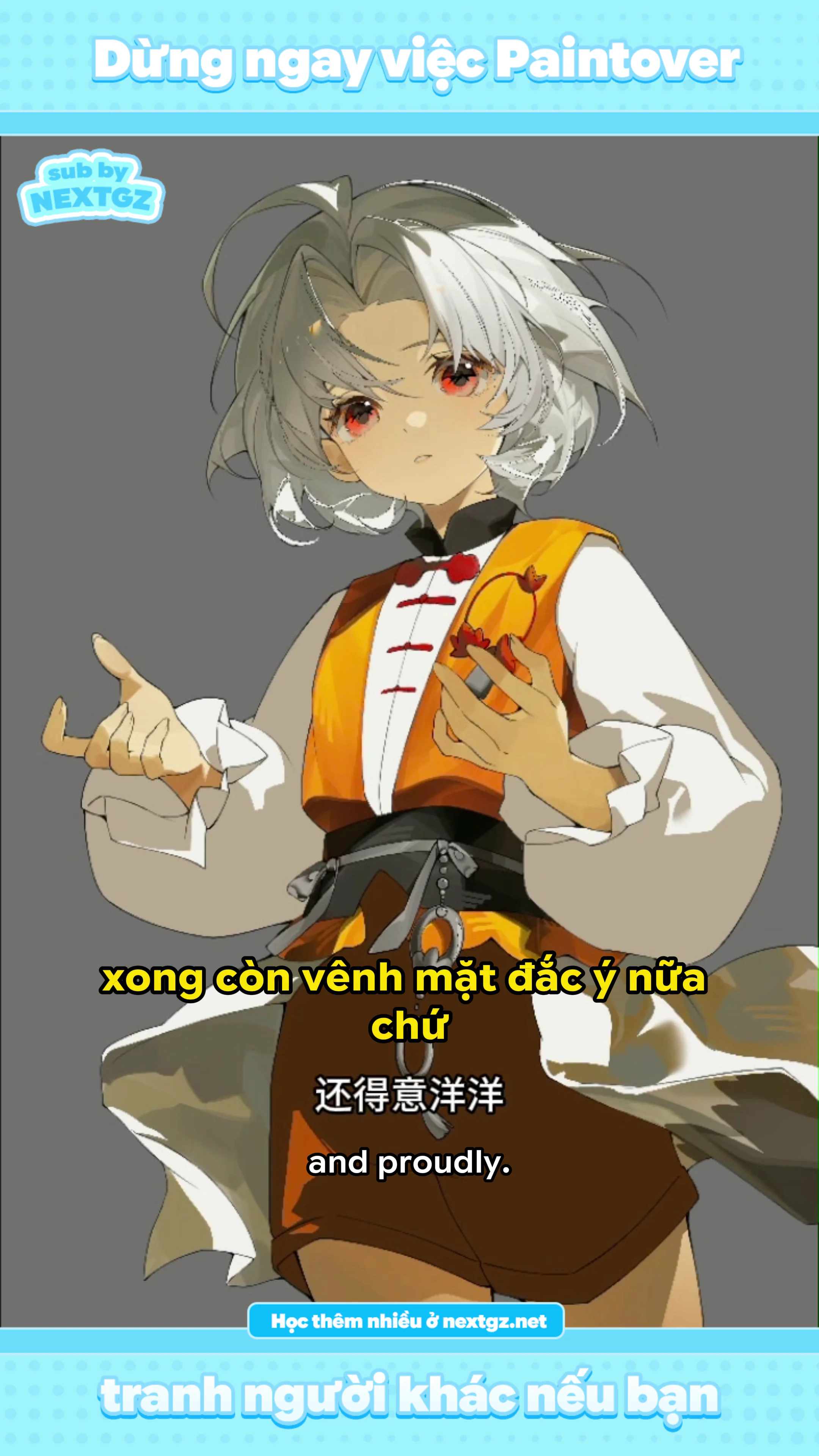
In the international Digital Art community, the act of Paintover (painting over, directly editing someone else's artwork) without permission is considered extremely rude and condescending. But sadly, in Vietnam, many people see this as "enthusiastic help".
The Analogy of "Someone Else's Kitchen"
Imagine this for easier understanding: You invite guests over for a meal. You've worked hard going to the market, cooking all afternoon. The dishes served might be a bit salty, or the presentation isn't very appealing.
Suddenly, a guest stands up, rushes straight into your kitchen, re-seasons the soup, re-stirs the meat dish to his own taste, then brings it out and says: "There, cooking it like this is tastier, try it and see if it's better?"
How would you feel? Grateful? Or deeply offended?
An unauthorized Paintover is exactly like that. It violates the artist's copyright and self-respect. It implicitly sends the message: "I'm better than you, I have the right to correct you, and you should be grateful for it".
The Thin Line Between Critique and "Nitpicking"
Critique and Nitpicking are two completely different concepts:
Constructive feedback: Focuses on solutions, opens up thinking, and most importantly, is ACCEPTED by the listener.
Nitpicking: Obsessively digs out minor, petty mistakes (the pinky finger is a bit bent, a strand of hair is a bit messy...) to showcase the critic's ego, without caring about the artist's feelings.
3. The "3 DON'Ts" Rule to Become a Civilized Art Viewer
To avoid becoming a tactless person on social media and maintain harmony in art groups like GZ Team Resource Community, please engrave these 3 golden rules in your heart:
Rule 1: If your skill isn't superior, don't "lecture"
It sounds a bit harsh but it's true. If your drawing skills (in anatomy, lighting, color) are not equal to or superior to the author's, then your professional advice is often... not very valuable. Even worse, giving incorrect advice (misleading) is more dangerous.
Don't use the excuse "I don't know how to cook but I know what tastes good" to justify yourself. Appreciating is one thing, but to give technical advice, you need professional knowledge.
Rule 2: If you don't pay, don't play the role of the "Difficult Client"
There are two types of artwork: Commission (paid, commissioned work) and Personal Art (personal art drawn for fun).
If you are a client (Client), you pay money, you have every right to request revisions, give strict feedback until you're satisfied. That's a professional responsibility.
But if you are just a free viewer (Viewer) on social media, you don't have that "power". Don't impose the strict standards of capitalism onto works created from pure joy.
Rule 3: No "Cry for Help" caption = Default is "Showcasing Art"
This is the most important rule. When posting, if the author doesn't clearly write a caption like: "Hey everyone, I'm practicing drawing hands, can someone help me fix it" or "Please give constructive criticism so I can improve", then please default to this: They are showing off their achievement (Sharing).
The psychology of an artist posting their work is similar to a new mom showing off her baby. Her own child (her brainchild), even if it has a flat nose or small eyes, she still thinks it's beautiful. She shows it off to find empathy, to find praise like "What an adorable baby". What mother wants to hear a neighbor run over and declare: "Your baby's skull is a bit misshapen, you should go get it fixed"?
4. The Art of Communication: Praise First - Critique Later (The Sandwich Method)
Having said that, real progress does need sincere feedback. But how to give feedback so people "accept it wholeheartedly" while still maintaining camaraderie? Apply the art of the Sandwich Method.
If you genuinely want to help (and the author has given the green light for feedback), follow this order:
The top slice of bread (Praise): Start with at least 3 sincere compliments. Praise the color, idea, lighting, or simply their hard work. This helps them open up and lower their defensive barriers.
Example: "Wow, the colors in this painting are so pretty, the vibe is very poetic."
The meat filling (Feedback): Offer gentle, suggestive comments from a subjective perspective rather than imposing affirmations. Use phrases like "I feel that...", "From my point of view...", "If it were me, I would try...".
Example: "But I feel the left hand is a bit long compared to realistic proportions, maybe you could check that out."
The bottom slice of bread (Encouragement): End with a positive, uplifting word.
Example: "But overall it's still awesome, looking forward to your next works!"
5. Conclusion: Building a Civilized Digital Art Community
Everyone, the path of pursuing Digital Art in Vietnam is already very thorny and lonely. Pressure from family, pressure from making a living, pressure from AI... we already have to bear more than enough. Therefore, let's not create more pressure for each other with unintentionally hurtful words online.
Progress takes time, it takes persistent practice over years. But a word of praise, timely encouragement is needed right now. It's a mental "doping" dose that helps a young artist find the motivation to pick up the pen and draw again tomorrow.
Be a cultured, high-EQ art appreciator. If you think it's beautiful, give a heart and praise it. If you think it's not beautiful, and they didn't ask, then scroll past or just offer moral support.
If you want to go fast, go alone. If you want to go far, go together.






Bình luận
0 bình luận
Đăng nhập để tham gia thảo luận cùng cộng đồng!
Đăng nhập ngayĐang tải bình luận...